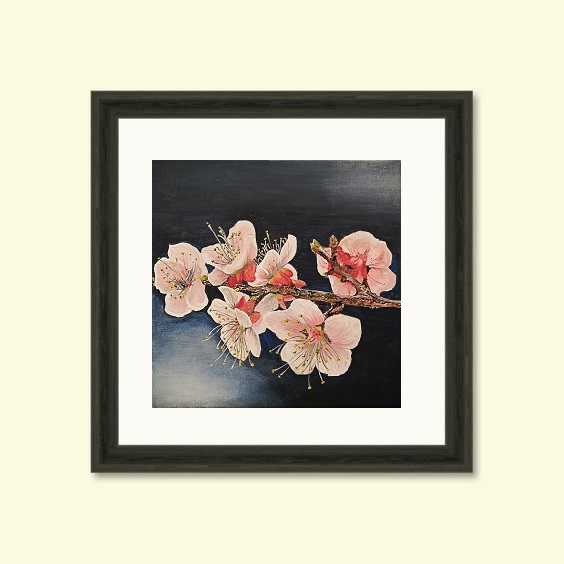
The New Year has opened up new possibilities for my paintings. It’s a breath of fresh air with a change in style and direction. And I succeeded with my first work.
Though winter’s chill lingers, “Blossom” captures the hopeful promise of spring. This original acrylic painting celebrates the return of sunlight, the anticipation of blooming trees, and the warmth of brighter days ahead. It evokes a sense of faith in new beginnings.
Created with acrylic and ink on canvas, this piece showcases a fresh artistic approach. The finished sides allow for frameless display, making it a versatile addition to your art collection. The small size makes it ideal for adding a touch of nature to a cozy corner or smaller wall space.
“Blossom’s” botanic subject and blend of classicism and art nouveau styles create a timeless appeal. Its photorealistic touches bring a modern sensibility to this classic theme. Imagine this painting bringing a breath of fresh air to your home or office.
Invite the optimism of spring into your space with “Blossom.” Add this unique, small-sized acrylic painting to your collection today and let its beauty brighten your surroundings.
Blossom at https://www.saatchiart.com/en-ca/all?query=helen%20polishuk with SPECIAL price under 500$.
How do you imagine the winter solstice 1,200 years ago? Let’s think about it together and imagine it. No electricity, little heat, only large semi-stone houses heated by fireplaces. No television, radio, or the information media that fill our world today. There are candles, there is a calendar fixed by priests, and there is faith. Yes, there is faith and the teaching of the cyclical nature of the year. There is faith that after the winter solstice, which hid the sun in darkness, the sun will come, the light will come, and a new year will be born. The days will begin to grow longer, there will be more light every day, and the world around us will begin to fight and resist darkness and fervor, death and destruction, in order to come to life. As in ancient times, so now, at this time they begin to sing carols – sacred songs reminiscent of the singing of birds, the sound of a stream, the rustling of trees and, most importantly, accompanied by a special ritual proclaiming the beginning of a new year and the arrival of light, spring and warmth.
Now imagine today, 1,200 years later, with the stage of Jeanne Lamon Hall at Trinity-St. Paul’s Centre (427 Bloor St W) illuminated by candlelight, and the Toronto Consortium Choir once again collaborating with outstanding students from the Schola Cantorum of the University of Toronto’s Faculty of Music on “The Flawless Rose: 1,200 Years of Christmas Carols,” an inspiring series of Christmas carols.
An action that takes us back 1200 years or vice versa, an action that revives for us Christmas, the birth of a new light from darkness, preserved and reverently restored carols that announce the most terrible and dark day and call for light and sun that will conquer the darkness.
As a consistent admirer of everything the Toronto Consort does, I would like to commend this evening as a wonderfully orchestrated collaboration between two talented conductors.Les Arts Florissants’ co-director of music, Paul Agnew, has joined Daniel Taylor as conductor of ensemble.
It was a play of darkness and light, a choir in the dark and a choir in the light. Two wonderful conductors. It was wonderful, as the wonderful singing of carols by the wonderful soloists was complemented by the stage interpretation of the action. And it was so beautiful, dynamic, subtle, and refined. This is that love of culture, that tradition of passing on ancient heritage. There were many young people in the audience, many students from the University of Toronto. Vichel Praetorius,Orlando Gibbons,Nicolas Gombert,Gustav Holst,Benjamin Britten,Herbert Howells music was playing.
A time of night’s dominance, when the day seems shrouded in shadows. The sun recedes to its furthest distance and seems to freeze in the silence of death: in these difficult times, it is difficult to understand that this is Sol Invictus, the Invincible Sun. A candlelit carol ceremony. A reflection on birth and rebirth, the importance of these concepts for transmission to the next generation.
….Perfection is achieved,not when there isnothing more to add,but when there is nothing left to take away….
( Antoine se Saint-Exupery)
I look forward to the next meeting with Toronto Consort.
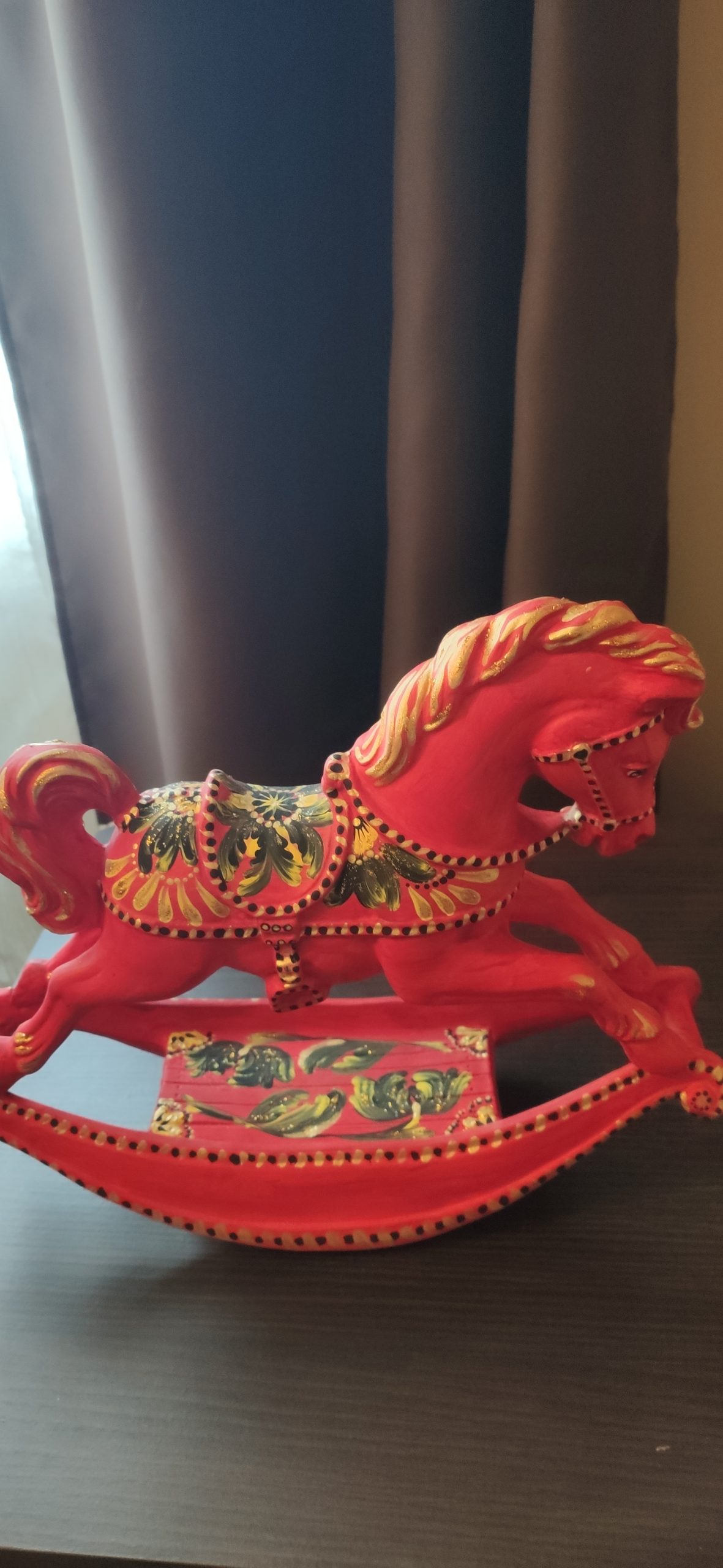
The New Year is galloping by in all its glory and unbridled speed. Maybe it’s just me feeling like the days are flying by faster than they did a few years ago? Apparently, as I get older, I find myself wanting to just sit and do nothing, look out the window, read a book, watch the birds chirping outside, admire the flowers I grew myself, play with my grandchildren, and simply pass the time. I can’t say I get tired of it. On the contrary, it brings me more and more pleasure with each passing year. The fiery fortnight of January has already passed. The red fire horse will soon enter its domain, and the year is shaping up to be the year of the red fire horse. And I’m still going through my work, looking at my sketches, analyzing what I’ve created in recent years, what’s good, what I don’t like. And I read and listen a lot. I’m especially interested in the most pressing topic: art management. An artist studies, creates, and produces to be sold. This is the artist’s main motivation. Even in the most difficult financial situation, an artist dreams of selling their works and turning them into capital. No matter how difficult this may be in today’s circumstances, one must constantly analyze and improve oneself through study to keep up with fashion and trends. I want to harken back to the early years of my creative work, when I created my paintings without much emphasis on sales, but many of my paintings have become collections of cultural centers after numerous exhibitions of my work. Today, much has changed, and what I especially want to share with you is my desire to expand the potential of each work to maximize its sales potential. So now I’m calculating whether I should buy equipment and create additional products to popularize my art, or leave everything as is due to my poor financial situation. After all, that would mean upfront payments, investments, and investments in a future no one knows. We didn’t know that in 2019 and 2020 we would be in quarantine, and then in a major financial crisis. In times like these, saving is better than spending.
It’s a leap, but I’d call it a risk. Another thought occurred to me: I’m holding myself back more and more. I’m becoming slower and slower. And I’m less and less willing to change anything; I’m giving up so many things, even beyond my capabilities. Oh well. Let this fiery horse gallop. Good luck to him and everyone in this fiery year.
If you translate the word “fiery” and look for its synonyms, it perfectly describes the first days and weeks of the new 2026 year. We don’t expect any surprises this year, but rather a rather unpredictable one.
I won’t tell you how important our teeth are for us. They are our healthy body, our mood, and our peaceful life.
Today I had my tooth treated. Nothing special, except that I’m a dentist and I used to work there and treat others’ teeth. Now I’m a bit old and can write and talk about it. In my practice, they used different filling materials and anesthesia, and the approach to treatment was different. There are many other innovations and inventions now, but the main thing remains: a healthy tooth is always better than a dead one.
Yesterday, I just bit into a piece of meat and felt the tooth with the filling crack. It cracked so badly that the filling was still in place, but half the tooth was loose. And a real burning sensation started around it—pressing it became painful. I skipped dinner and decided to fast because chewing was so difficult. And it wasn’t a molar, not a front tooth. It was a lateral tooth. Such a tooth has its own characteristics. It always consists of two roots and two nerves. All night I imagined it, trying to guess where and how it cracked.
If it’s cracked in the middle, treatment may involve its removal, as the two roots will separate. If it’s cracked laterally and deeply, the nerves need to be removed and the canals filled. And when there’s inflammation, like mine, this procedure isn’t very gentle, as the inflamed nerve prevents treatment and will react. In those days, when I was practicing, arsenic was used. It helped quickly kill the nerve and give the dentist access to the cavity. Arsenic is no longer used. Therefore, the procedure itself isn’t very gentle. I slept peacefully and didn’t feel any pain, although I need special treatment—I have a low pain threshold, I’m very patient, and I tolerate pain, even if it’s very severe, like renal colic or appendicitis. So don’t ask me if it hurts. I won’t answer this question very well. I’ll probably say, “It’s bearable.” And that would mean, “It hurts, damn, what are you even asking?” This morning, I was already bracing myself for a trip to the dentist, as you shouldn’t wait more than 24 hours for a broken crown—it’s an emergency procedure. And I agreed with myself that the tooth needs to be depulped, which will significantly accelerate its decay and quickly lead to its loss. The filling will be large, and a depulped tooth lasts a maximum of five years, after which it begins to decay, since a dead tooth has no calcification.
Just like that, a tooth gets lost out of nowhere. It cracked. I’m over 60. What does this mean? It means that if we, those born between 1950 and 1980, start losing our teeth in our 20s, then by the time I’m 60, almost 50% of our teeth will be gone, especially those lateral ones. And then the worst thing will happen: to have a beautiful smile, people will start filing down and destroying adjacent teeth to put in cosmetic bridges, which in 5-10 years will take away more teeth. By my age and a little older—70—a person will end up with full dentures or, at best, implants. The later fillings are placed on lateral teeth, the healthier the body and the longer a person’s natural teeth will last, and that means health. But if they crumble—and I’ve had two cases recently where my teeth simply crumbled. One sadly lost its nerves and now sits like a stump, awkward to bite on, but it stays in my mouth. And the second—just today. Suddenly, not from hard food, without any prior symptoms, healthy, and then suddenly it crumbled. Does this mean there’s a problem with my system and a calcium deficiency? Perhaps. And not only that, in my region there’s a vitamin D deficiency, not enough sun, and my eyes are going blind—we live in the north and in a snowy country, where even perfectly healthy people begin to suffer from a lack of vital elements in the body. And no matter how much scientists study this, no matter how many vitamin supplements they recommend, it doesn’t help us. I actually thought yesterday, driving back to Toronto at 4 PM, sitting in the car, that we’re unlucky with the sun, when I had to turn on the car lights because it was dark. The sun’s already gone at 4 PM. If it wants to shine in winter, it’ll come out for two or three hours and that’s it. Anyone who doesn’t get to enjoy it is unlucky. And it’s like that for six months a year. There are many winter days when there’s no light at all, it’s dark in the morning. And then there’s snow, blizzards, poor visibility, snowdrifts, and all that other stuff that’s so typical of Canada. So, about teeth.
Take care of your teeth. Keep them healthy as long as possible – this is the key to your good health and your good mood.