About Sushi

The culinary phenomenon of sushi begin in Japan, but rather as an ancient fish preservation method in Southeast Asia along the Mekong River. It evolved over a thousand years from a pungent, fermented survival food into the fresh, fast-paced delicacy we recognize today.

The oldest form of sushi was as a method used in 2nd – 8th Century in Japan to preserve freshwater fish by packing it with salted, fermenting rice. The rice produced lactic acid to keep the fish from rotting. Crucially, the fermented rice was discarded because it turned mushy and foul-smelling—only the preserved fish was consumed.This is named Narezushi sushi and long history about this sushi I received from sources at the exhibition in Japanease Foundation this week.

Long before reaching Japan, the technique emerged in Southeast Asia—specifically along the Mekong River basin (modern-day Laos, Thailand, Cambodia) and Myanmar. Indigenous groups devised a way to scale, gut, salt, and pack freshwater river fish into barrels with cooked rice.
As the mixture sat, natural lactic acid bacteria consumed the rice carbohydrates. The resulting lactic acid acted as a heavy chemical shield, preventing standard decomposition bacteria from rotting the meat.
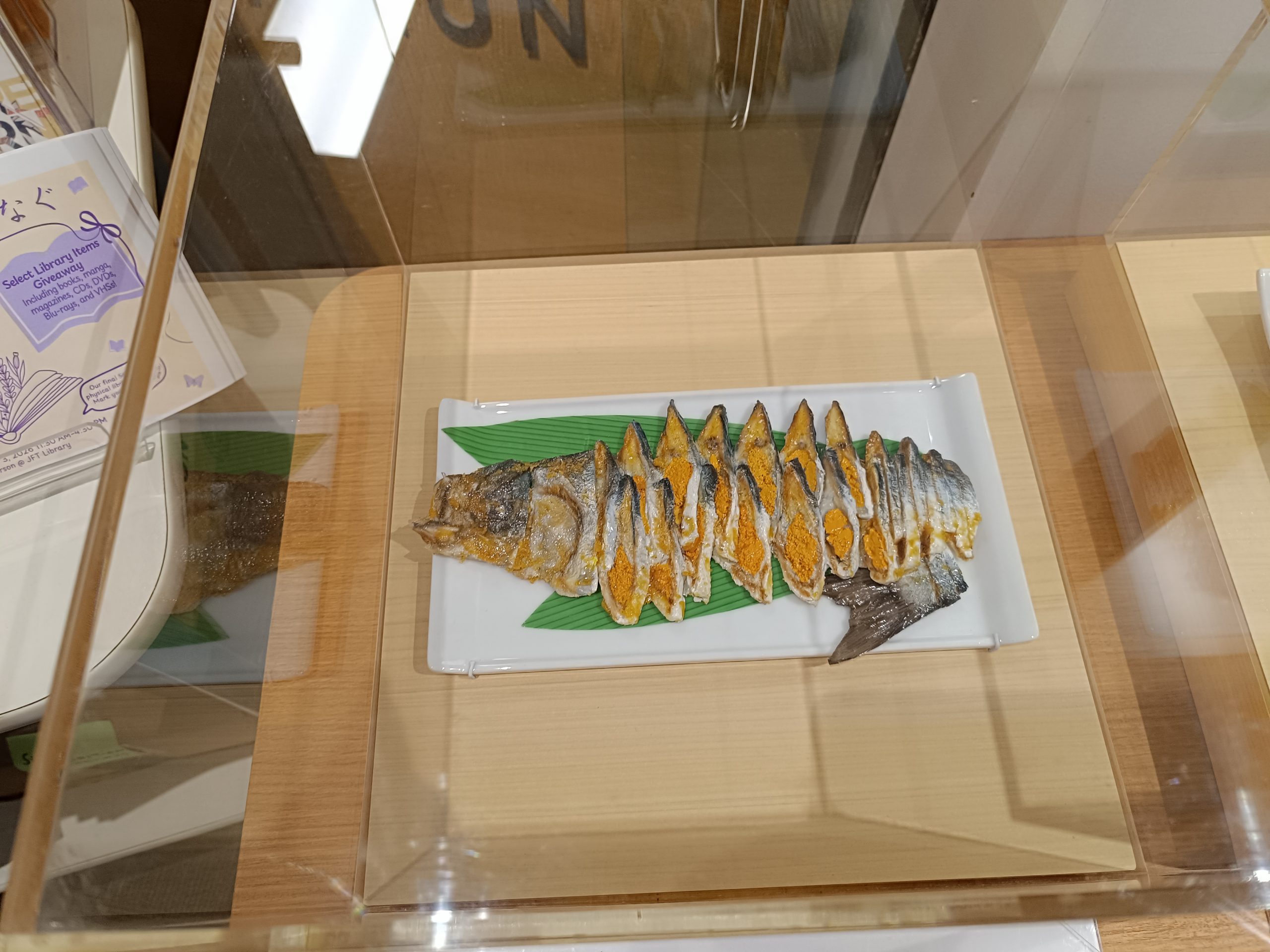
By the 2nd to 4th century CE, the method spread into southern China, where it reached peak popularity during the Song Dynasty. It migrated to Western Japan around the Yayoi Period and in appearance, it bore no resemblance whatsoever to our concept of sushi as such. It was the great-grandfather of our modern method of preparing sushi.The exhibition featured models of the earliest sushi and screened a film about its history.
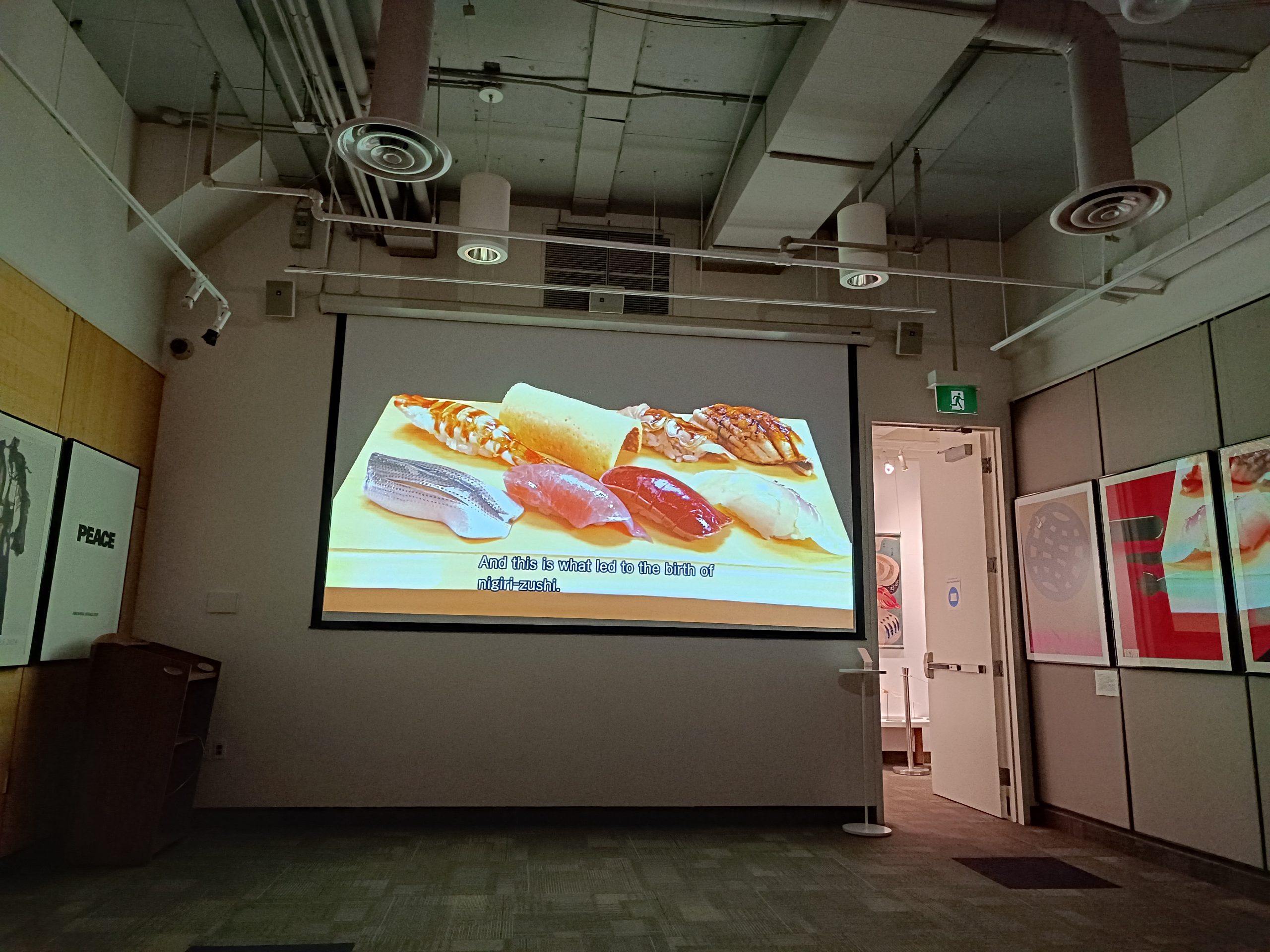
Modern sushi is all about fresh, delicate seafood and eating the vinegared rice. Original narezushi was the complete opposite.Unlike the light taste of a modern roll, narezushi is notoriously pungent and incredibly sour. Scientifically, its odor profile has been measured as one of the most intense food smells in the world (often compared to an intensely sharp, aged blue cheese).

While modern nigiri dominates global cuisine, you can still eat authentic, ancient-style narezushi in a few historic pockets of Japan.

This technology has now been improved and is used in some dishes with certain types of fish. For example, for mackerel-boasting an 800-year history, mackerel is packed with rice and wrapped tightly in leaves. Because it’s only fermented for a few days, the rice is intentionally eaten alongside the fish.

For wild carp-aged up to 2–3 years. The fish bones completely soften, and the local delicacy is thinly sliced—often prized for its orange, cheese-like roe—and paired with sake.

As the practice spread to Japan, the Japanese fundamentally transformed it. Because rice was incredibly precious, people shortened the fermentation time to a month or two. This left the fish partially raw and the rice tangy but edible, creating the first version where both the fish and the rice were eaten together.

That is how they came into being Hamanare and Nama-narezushi in 14th – 15th Century in Japan.

With the widespread commercial production of rice vinegar, chefs discovered they could entirely bypass the lengthy fermentation process. By mixing vinegar directly into fresh rice, they could instantly mimic the sour taste of fermented sushi, inventing “fast sushi” and that is how they came into being Hayazushi (17th – 18th Century).

Later,in around 1820-s,a creative street-food peddler named Hanaya Yohei revolutionized the dish in the bustling city of Edo (modern-day Tokyo). To feed busy workers quickly, he began shaping small oblongs of seasoned rice by hand and topping them with fresh, raw slices of local fish caught straight from Tokyo Bay. This became the literal blueprint for modern sushi and for today in Tokyo we are have street Sushi Avenue,along which samurai transported prepared sushi.Nigiri sushi remains the most popular sushi in Japan to this day.
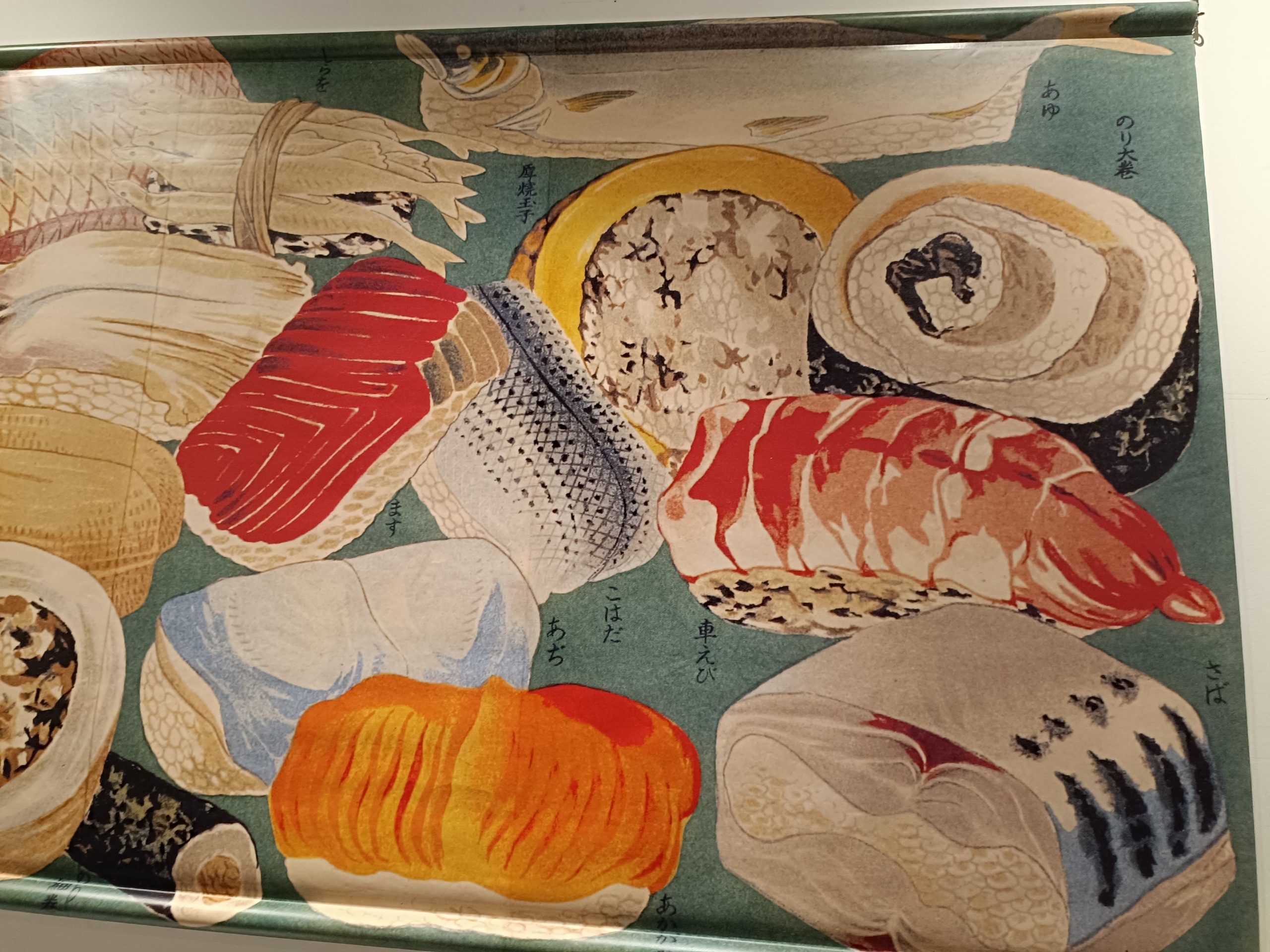
The history of using tuna in sushi making is interesting.Today, bluefin tuna (maguro) is the undisputed king of the sushi world, but it was historically despised in Japan. For centuries, tuna was considered an unlucky, low-class “garbage fish” (gezakana).
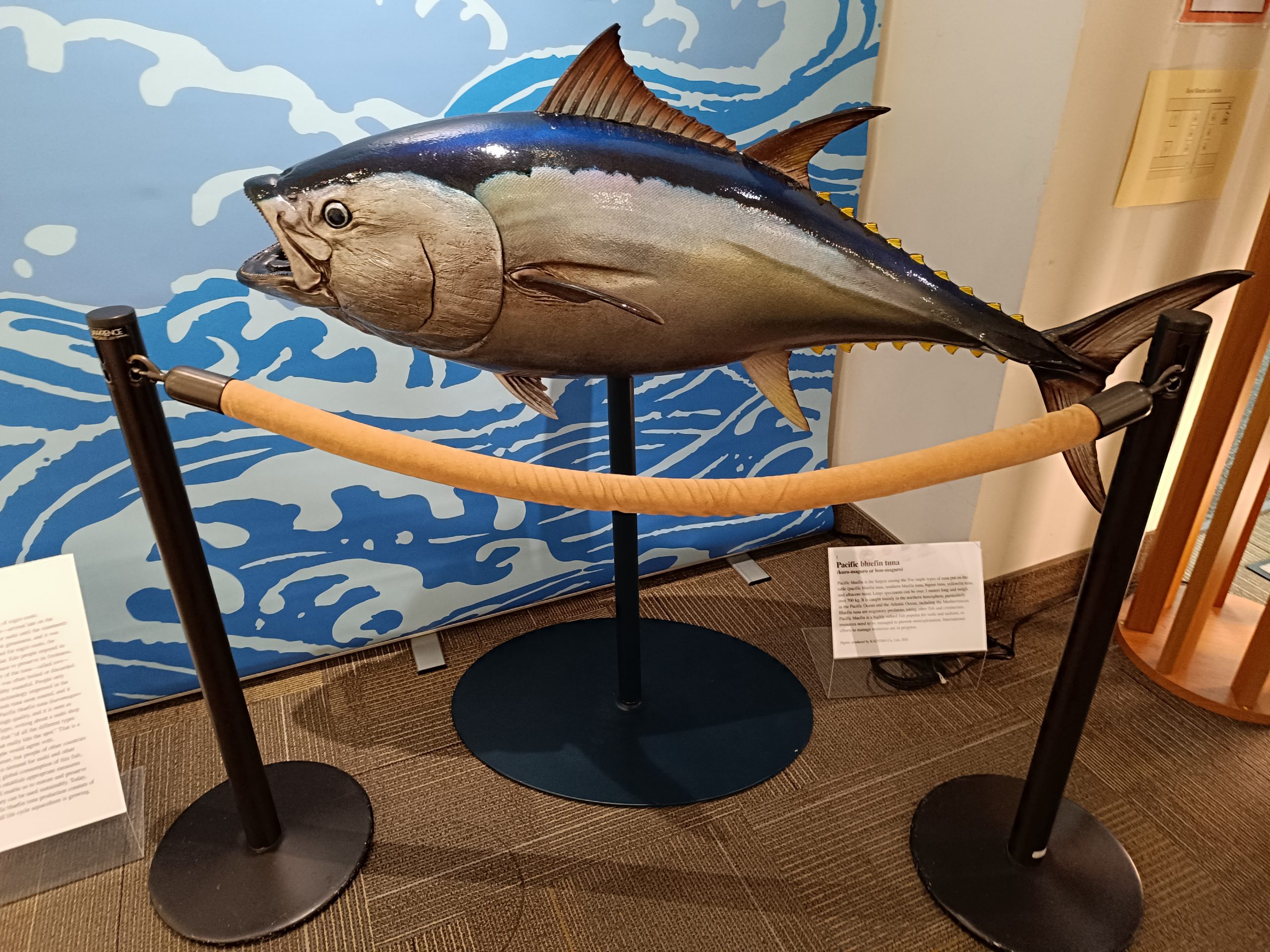
In ancient Japan, aristocratic diners strictly avoided tuna for three reasons: the old Japanese word for tuna was shibi. This was homophonous with the phrase shibi meaning “day of the dead,” making it highly taboo and bad luck to serve; tuna is a warm-blooded, highly metallic migratory fish and without refrigeration, its dark red meat oxidized and turned a repulsive, foul-smelling brown almost immediately after being caught; and when peasants had no choice but to eat it, they would sometimes bury the meat in the ground for four days to let it ferment, just to mask the bloody taste.

The true golden age of tuna didn’t arrive until after World War II, fueled by two massive shifts.

During the post-WWII American occupation, the Japanese diet rapidly shifted toward Westernized preferences for higher fat contents, beef, and dairy. Suddenly, the rich, buttery texture of toro went from greasy to luxurious.

By the 1960s and 70s, the invention of specialized electric flash-freezers (-60°C) and commercial air freight allowed global airlines like Japan Airlines (JAL) to transport perfectly preserved fresh bluefin from places like Atlantic Canada directly to Tokyo’s markets overnight.

Today the cuisine has evolved into a massive $18.28 billion global industry that blends strict Japanese tradition with high-tech automation and modern lifestyle values (The Businesse Research Canada).

Ironically, the ancient history of narezushi has come full circle. Some avant-garde chefs are now experimenting with using traditional Japanese koji (fermentation starter) to add intense, aged umami depth to contemporary seafood and fatty tuna (toro) dishes.

Here are the top local sushi spots right here in Etobicoke, grouped by style and budget:

IKKOI SUSHI&RAMEN at 5084 Dundas St.W.,(20-30 $ per dish),KIBO SUSHI at 4925 Dundas St.,W.,(20-30 $),SUSHI RUN at 3351 BLOOR ST.,W.,and very popular ,,all you can eat” K&B SUSHI at 1184 The Queensway.

Photo and video made by Helen Polishuk&Astra Production 2026.
About traditions

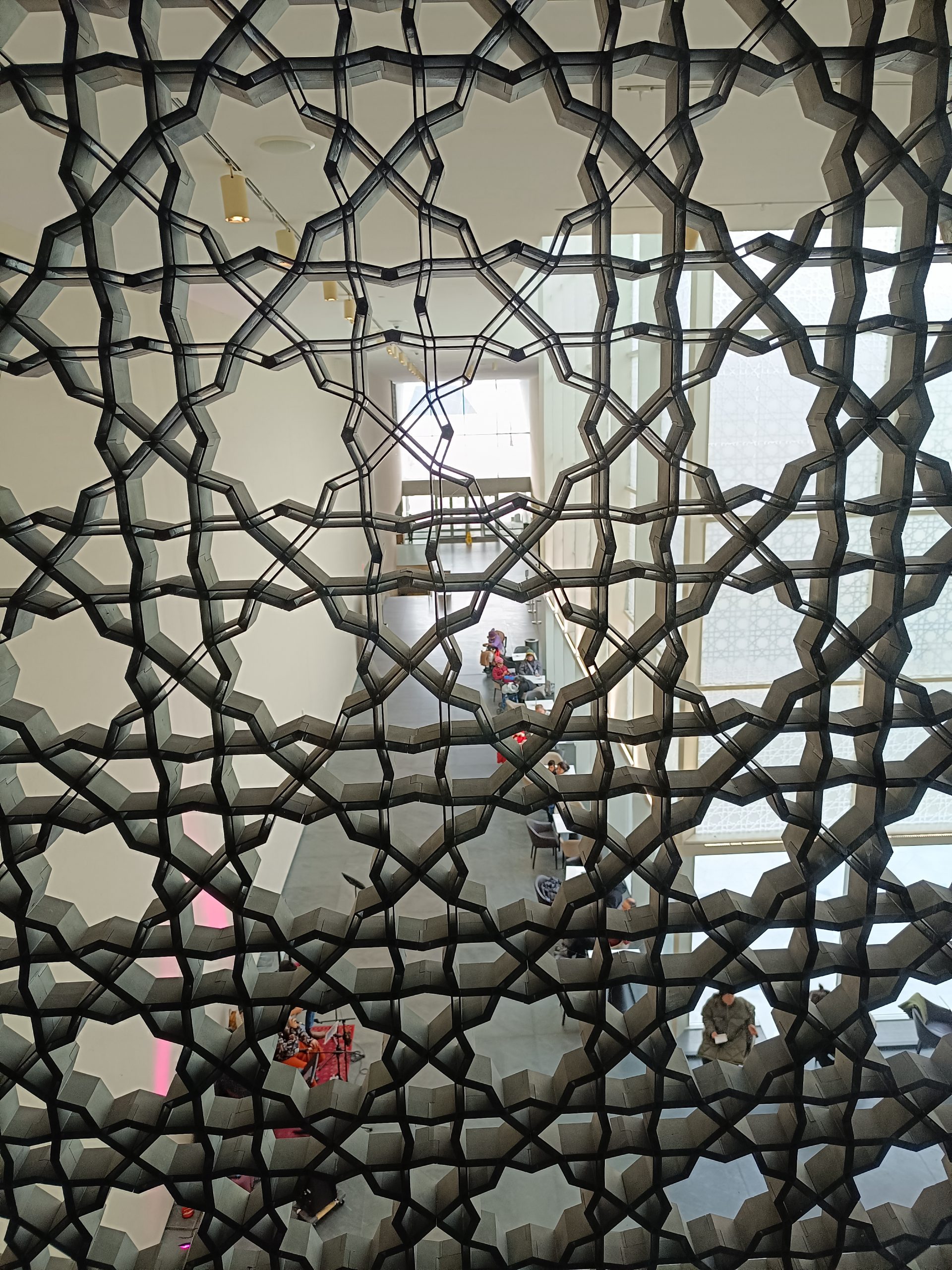
My admiration for the art of the ancient and modern East knows no bounds. I am inspired by their elegance and careful observance of traditions. Imagine that most often in the shops at the bazaar or in the salons of small workshops you find entire generations of masters who have dedicated their lives to the work that their great-grandfather and father did. Wood inlay, olive wood carving, ornamentation on the walls and ceilings of mosques – all this is masterfully executed work that is passed down from generation to generation. And despite all the changes taking place in the East with the change of borders of countries and their existence, these people remain devoted to their craft. Simple, talented, modest masters who will take with them their accumulated knowledge, just as the masters who created the Persian rock baleriefs of Mesopotamia once disappeared.

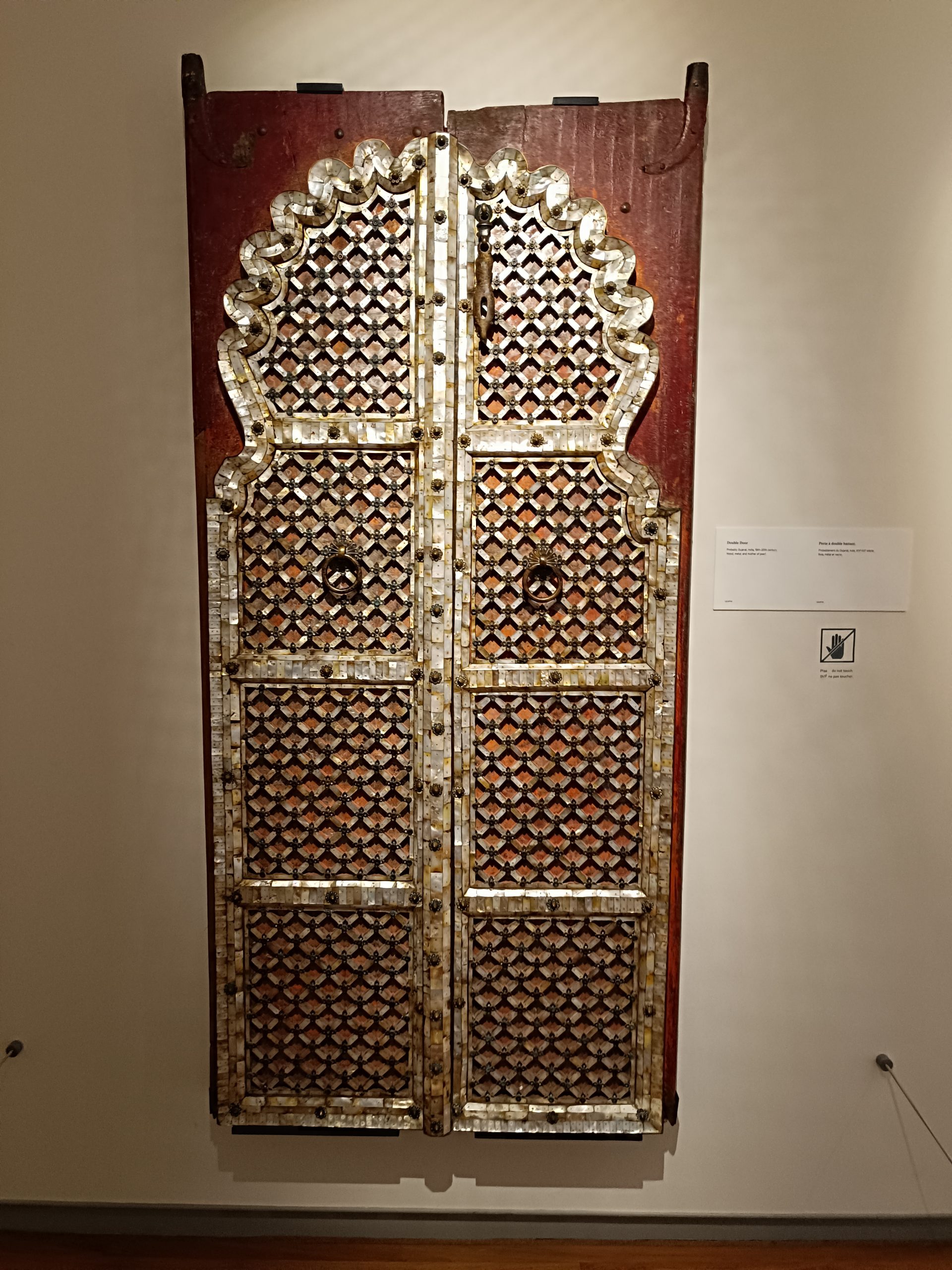
(the combination of carving, inlay and very fine workmanship, finished in silver, creates the shine and magnificence of this door)

I have already described my admiration for the wooden door, made of silver inlay with mother-of-pearl. I will show you its appearance here.
But this is the smallest gold that I would note as a reward for love of the East.
I want to tell you that from the first books that were written in Arabic there are interesting books that we will talk about.

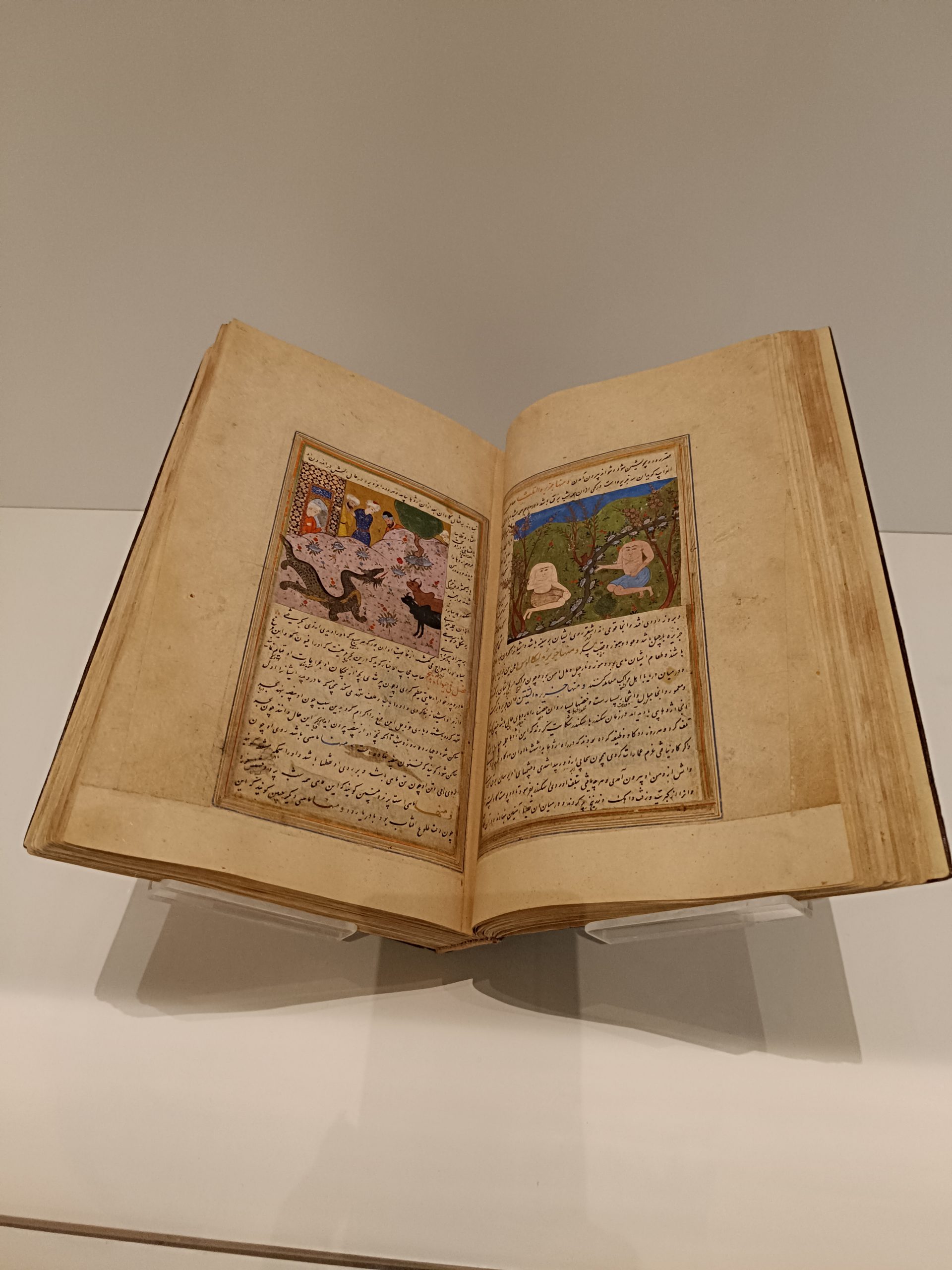
Masnavi by Rumi

This is an interesting collection of jokes and stories taken from the Koran, Hadith stories and simply Persian tales.

Can you, my readers, imagine the old days when books first appeared? That is, letters, written words, paper on which they wrote, and all this was formed into books. Books were written specifically for preservation and transmission to posterity, therefore, rules of conduct and lessons for edification, social order, descriptions of stories, examples of how to live and coexist were written in books. But also, the wise Persians had funny stories and jokes. Everything for the family, so to speak. In one book you could find everything

This is wisdom.
This is Eastern, Islamic wisdom. It would be interesting to get a translation of these stories, because they focus on Sufi interpretations.

This is a work of Rumi – spiritual couplets. And it is the Koran in Persian. It is a six-volume poem.

It was written by Mawlada Jalaluddin Muhammad Rumi, who lived 1207-1273, a Sufi poet, Islamic theologian, faqih. He is originally from the region of Afghanistan and Tajikistan, those places are also called Balkh and therefore he is sometimes called Balkh. His influence, after he created this poem, goes far beyond his place of residence and covers Turks, Greeks, Pashtuns, Persians. His poems have been translated into many languages ​​of the world, and what is interesting is that he has become the best-selling poet in the United States in the modern world.

What is especially interesting is that his poems have received recognition both in the Arab world and in the Persian world, they have been translated and today they are read both in the original language and in translation. His works have influenced the popularity of Persian literature, the literary tradition of the Persians.
I do not really understand what the differences are, so I ask if anyone knows more, please help me and correct me if I am wrong.
After the death of his father, his son, in order to perpetuate the glory of his father’s works, founded the Sufi order of Mavavi, in whose rituals the works of Rumi are used.
Remember those dancing darvishes in Turkey, who spin around themselves, twisting until they feel weightlessness? These darvishes, these men in long white dresses with caps on their heads, who can dance their amazing dances for a very long time, mastering weightlessness and standing firmly, not falling, dancing in a circle. Rami was their spiritual ancestor.
Very interesting.
Rum, Rumi – something familiar. Oh, yes. After all, this is the name of Byzantium, ancient Byzantium, Byzantine Anatolia, a place in southern Turkey. Before the conquest of this place by the Persians and Islamic Turks, it was known as Rome. Roman places. In Arabic, “Rumi” – Roman. Perhaps this refers to the Romans who lived in those places, to the Anatolian areas themselves. In Turkey, there is a tomb of Rumi – also known as the Mevlana Museum – in the city of Konya, Türkiye.

Rumi was from a family of a noble court theologian and his family faced flight, poverty and wandering because of the Mongol invasion of their state of Khorasan. They stopped in the region of southern Turkey, among the Seljuk Turks, where young Rumi received an education and was imbued with a Sufi mood. The most interesting thing that I would like to emphasize is that all the troubles, wars, the death of his son – strengthened him in his views and in old age he devoted himself to literature and preaching. Although his legacy is small, it is very significant. In his poems, he glorifies man, the values ​​​​of man, his greatness. And this was revolutionary for the society of that time, since it went against the religious teachings of that time.

And thanks to this, his Masnavi appears – the most widely read poem in the world from his legacy. These are couplets in rhyme. And although there is no connection in his work, the tempo and rhythm are felt. The author wrote his work in part already reading it to his student – and here is the purest crystal purity of relations – no one appropriated it, did not sign under the lines, but passed it on, put it on paper and left a legacy as the work of Rami, indicating that the student wrote it. Rumi’s wisdom is beautiful and his poems are magnificent. His tone and tact in writing couplets is beautiful, it is refined and light. And it conveys the mood and talent of Rumi. At least that passage that is known to everyone – about the elephant. That everyone who touched the elephant described it in the dark as if they were feeling a certain part of the animal. And the end of the story is that everyone called it in their own way without seeing everything in general, but if they had turned on the light……
Beautiful…..

January 26,2025

I express my gratitude to the @AgaKhanMuseum Toronto

All exhibits shown in the post are exhibits of the museum and are presented for viewing. There is nothing better than looking at the past through today’s history. Thank you.

Midland is a beautiful city

Since Midland was not far from where we first encountered Lake Huron in winter, we decided to visit it. I forgot to say that Penetanguishene the name is long and difficult for visitors to pronounce, so it was shortened by half and even the old name of the railway station was Penetang.

Midland is on the road to Penetanguishene.

That is, you need to drive through Midland to get to that city. Therefore, all roads lead to Midland. And although this city on the map is somehow nondescript and seemingly unremarkable. But this is the city with which the history of Huronia is connected. It is located south of the Georgian Bay’s 300 islands and is very economically developed.

Of course, when we went into the Midland Museum and saw those old photographs reflecting the former life of this city, I was very sorry that now there is no railroad to this wonderful place. But once it was the railroad that filled this area with life.
But the history of this place is connected with the history of the Hurons – a local Indian tribe that had a large settlement in this area and a developed economy and was engaged in the extraction of beaver fur, fur and grew corn.
The Huron tribe or otherwise called Wendat lived in this place. Due to diseases, wars and displacements, they migrated and now there are 5000 of them and their reservation is in Quebec. However, for us they left a reminder of themselves in the form of an Indian village, Huron village, which is in the Huron Museum.

I already wrote that we didn’t have to choose the time and weather, we used what we had and were very happy that the museum was open on Monday.
Yes, I want to note that it was in Canada that I fell in love with small towns for their museums.
No other large museum in Toronto has such a colorful exhibit. To see a real store from 1900, to see the design models of ships that sank in Lake Huron, to see the desks at which our great-grandmothers sat – it’s worth coming to the Huron Museum on Monday.

And the winter continued. And the snow fell, as if the gray sky had a hole and could not stop until it poured out all the snow. And there were snowstorms in places both on the road and in the field. But it was all worth it to get to this Huron village. The museum workers opened the door for us and we found ourselves behind a wooden fence in a small cozy settlement, which was all made of wood. In front of us there was a small roofed table made of thin tree branches and a log-hewn table, a half-hut, where people were apparently sitting. Further on there was a hut that went underground – the shaman’s house. The tribe’s shamans did not live in the village, but were in seclusion and came when called. The shaman’s house was half underground – I assume that this was for insulation from the cold and heat. In front of the entrance there were animal skins and some other symbols.

Huron/Wendat(Ouendat) Village

For tourists and visitors, everything is built like this, just so that we can see examples. Opposite the shaman’s house there was something like a wooden table covered with leaves and capes. Under it there was a hole and the remains of firewood. We were told that this was the place where the shaman treated people – they would put the sick person on top and light a fire underneath and fumigate. In our time, I do not know if such rituals exist, but I can confirm that many indigenous people study Indian medicine. Further on there is a large tall wooden house, because of which we came to see this village. The house is unique. It is built of large wooden beams. It has a solid foundation and a semi-oval high roof. That is, the roof arch is high. And when we entered this winter blizzard weather, when we were covered with snow in this dwelling, then all the fuss, all the bad weather remained outside the doors. Inside the house there are two floors. In the middle between rests of the fire – they cooked food and warmed themselves there. On these floors, on wooden crossbars, people slept. Wooden houses are very long and high. And in Indian villages there were up to 50 of them. Sometimes even more. All such villages were necessarily built near water, reservoirs, rivers and lakes. Inside the houses there are beaver skins. And for some reason they made me sad that this served as a source of wars and the death of tribes because at some time in history it became a value and they fought, killed and pursued them. Beaver skins were most prized. Also, when the first settlers came to this peninsula and met these tribes, they saw women dressed in rich fur clothes, in beautifully sewn fur decorations and decorated with gold jewelry. After that, a stream of hunters and traders came here This disrupted the normal life of people. Changed. Changed forever. It is also interesting to note that the Indians exchanged skins for glass beads and iron products for growing corn. When burying the dead, they placed glass beads and iron vessels, shovels, knives next to the deceased. This was considered wealth and honor. There are such glass beads in the jewelry of local tribes. Well, today I want to thank them for the fact that thanks to these tribes, corn was brought to Europe. And to this day, the cultivation of corn is a priority for local residents and their pride. Although corn is a difficult crop to grow, it is multifaceted and good for both livestock farming and food. Its production and cultivation brings profit and helps the circulation of rural producers. Today in Europe it competes with the production of wheat and even surpasses it. The Indians also grew tobacco and were engaged in fishing and hunting. The communities were mostly vegetarians. Only in winter, during the hunting season, did they eat meat. Basically, their food consisted of plant and fish.
In the history of Midland there is a story associated with the name Jean de Brebeuf.

But I won’t write about it today, because we were trying to go to St.Ignace II,but we were unlucky again. There was a very strong snowstorm on the road. The snow was raging. It was getting dark. The cars were driving carefully one after another along the highway. Visibility was impaired. The snow was sticky and thick. We turned onto the road to the area. We drove to the sign. There the road became dangerous as written on the road signs. I still continued driving until it narrowed to one passable car and when entering or entering the place we found a pickup truck that blocked the entrance. It was standing on the road, blocking the passage. There was no one in the car and there was snow around the car. We turned around and drove away, deciding that the trip would need to be repeated in more suitable weather and time.