About Sushi

The culinary phenomenon of sushi begin in Japan, but rather as an ancient fish preservation method in Southeast Asia along the Mekong River. It evolved over a thousand years from a pungent, fermented survival food into the fresh, fast-paced delicacy we recognize today.

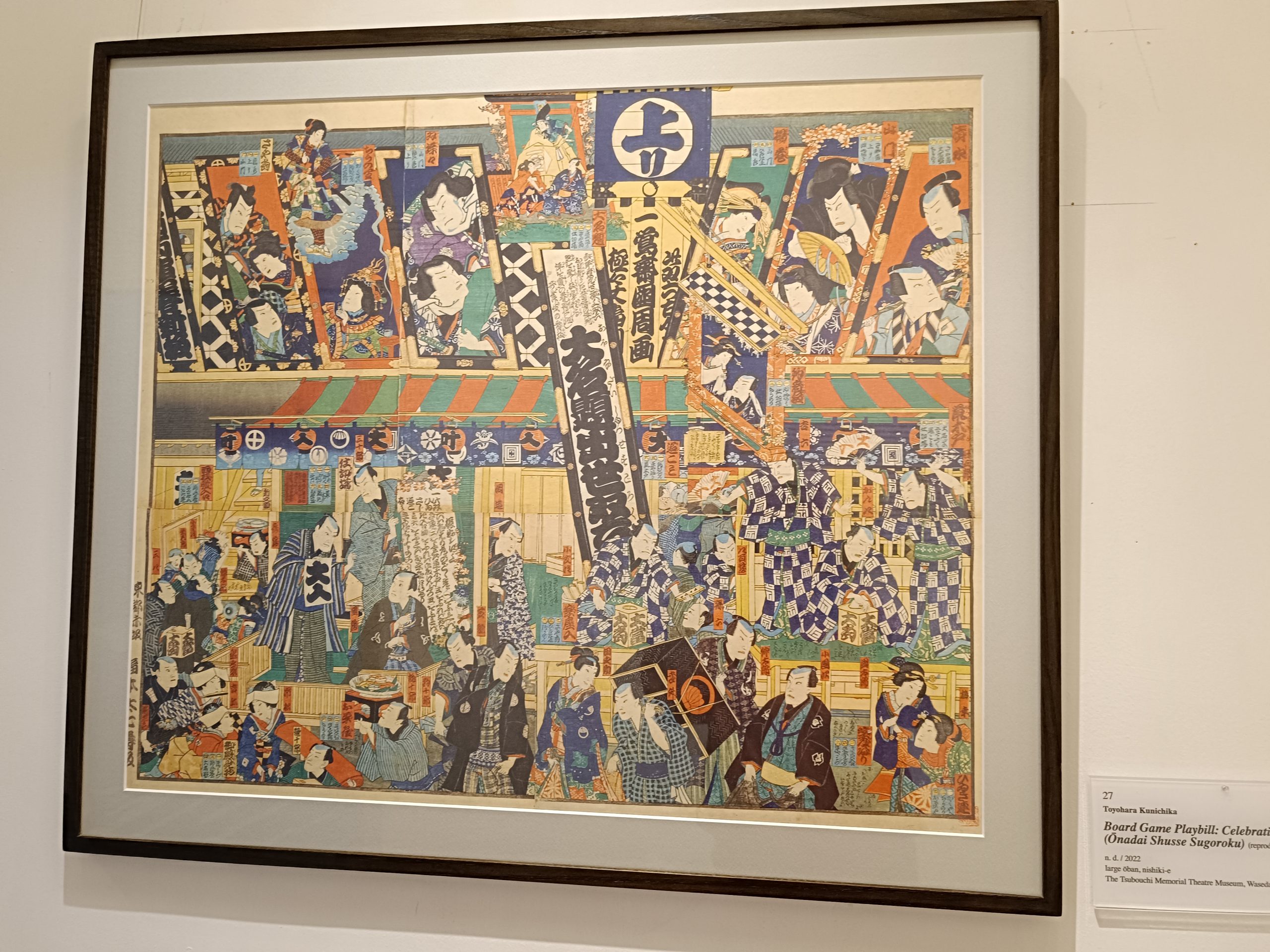
The oldest form of sushi was as a method used in 2nd – 8th Century in Japan to preserve freshwater fish by packing it with salted, fermenting rice. The rice produced lactic acid to keep the fish from rotting. Crucially, the fermented rice was discarded because it turned mushy and foul-smelling—only the preserved fish was consumed.This is named Narezushi sushi and long history about this sushi I received from sources at the exhibition in Japanease Foundation this week.

Long before reaching Japan, the technique emerged in Southeast Asia—specifically along the Mekong River basin (modern-day Laos, Thailand, Cambodia) and Myanmar. Indigenous groups devised a way to scale, gut, salt, and pack freshwater river fish into barrels with cooked rice.
As the mixture sat, natural lactic acid bacteria consumed the rice carbohydrates. The resulting lactic acid acted as a heavy chemical shield, preventing standard decomposition bacteria from rotting the meat.
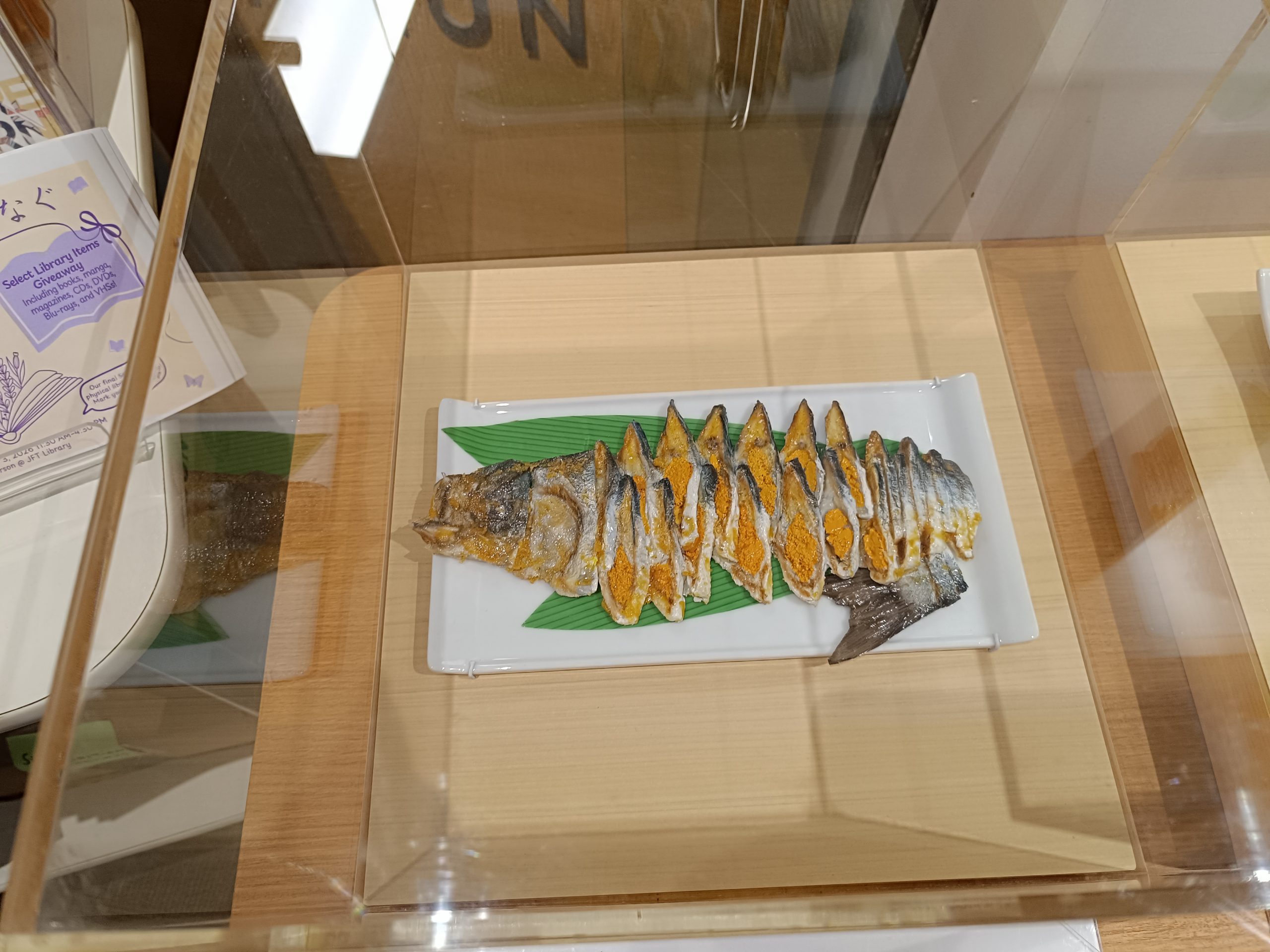
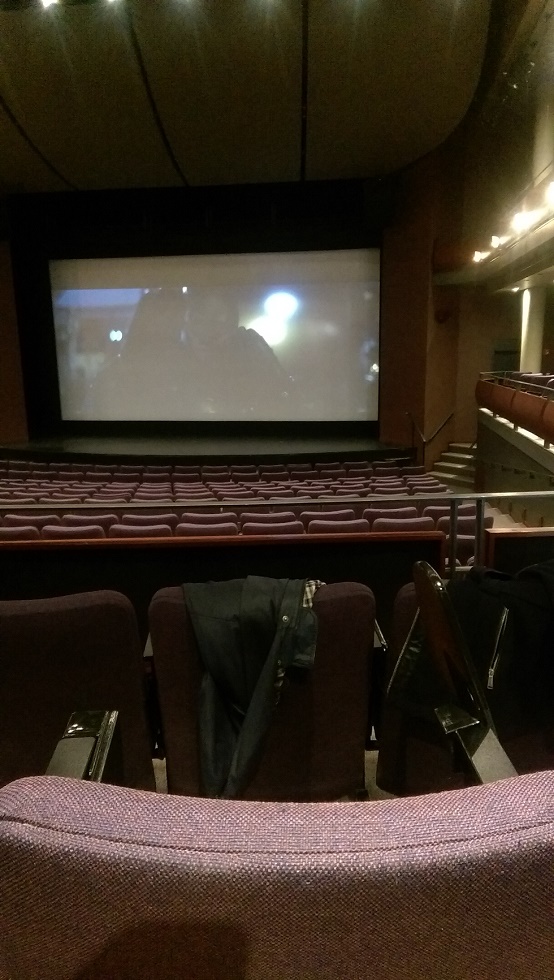
By the 2nd to 4th century CE, the method spread into southern China, where it reached peak popularity during the Song Dynasty. It migrated to Western Japan around the Yayoi Period and in appearance, it bore no resemblance whatsoever to our concept of sushi as such. It was the great-grandfather of our modern method of preparing sushi.The exhibition featured models of the earliest sushi and screened a film about its history.
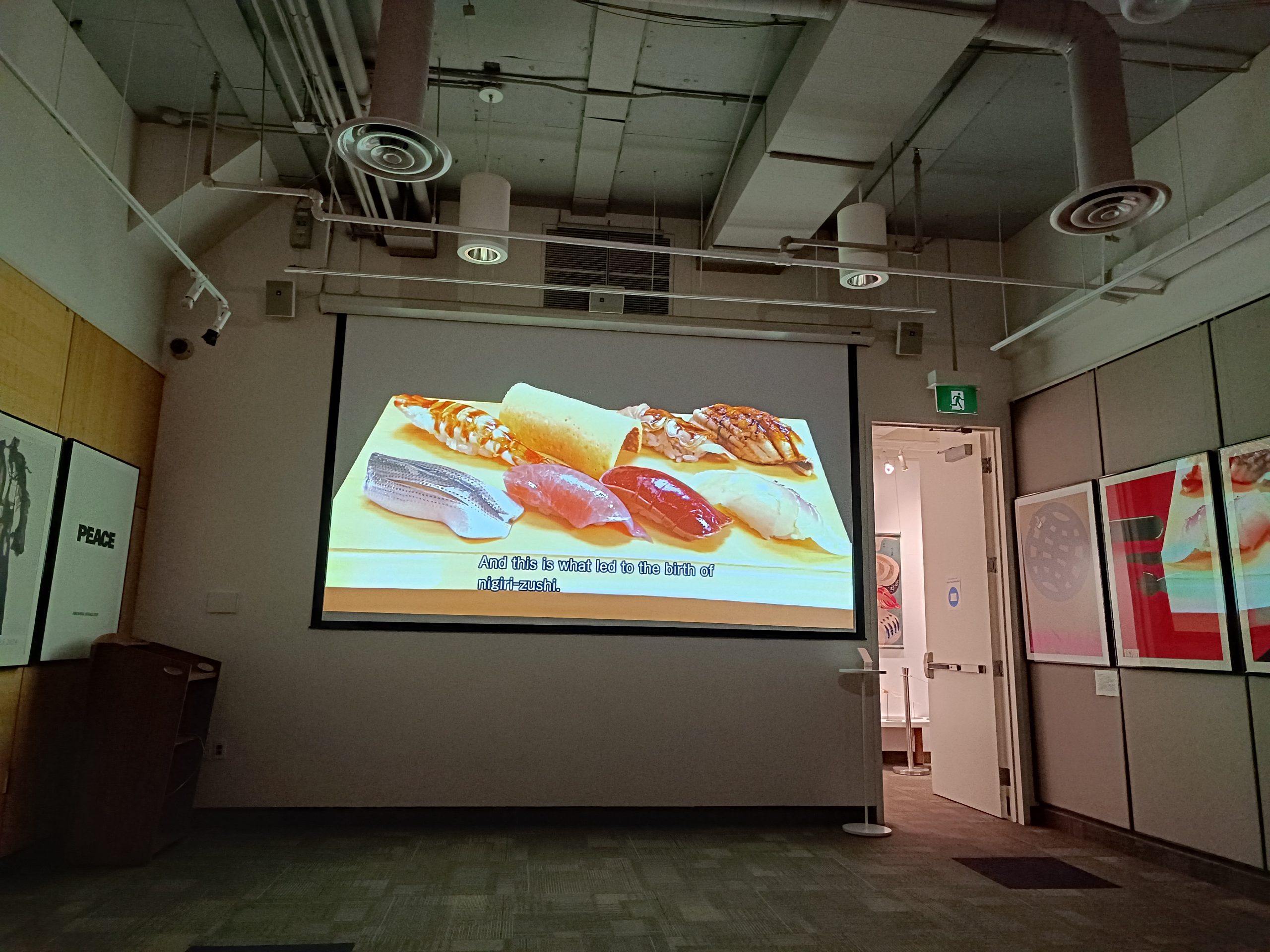
Modern sushi is all about fresh, delicate seafood and eating the vinegared rice. Original narezushi was the complete opposite.Unlike the light taste of a modern roll, narezushi is notoriously pungent and incredibly sour. Scientifically, its odor profile has been measured as one of the most intense food smells in the world (often compared to an intensely sharp, aged blue cheese).

While modern nigiri dominates global cuisine, you can still eat authentic, ancient-style narezushi in a few historic pockets of Japan.

This technology has now been improved and is used in some dishes with certain types of fish. For example, for mackerel-boasting an 800-year history, mackerel is packed with rice and wrapped tightly in leaves. Because it’s only fermented for a few days, the rice is intentionally eaten alongside the fish.

For wild carp-aged up to 2–3 years. The fish bones completely soften, and the local delicacy is thinly sliced—often prized for its orange, cheese-like roe—and paired with sake.

As the practice spread to Japan, the Japanese fundamentally transformed it. Because rice was incredibly precious, people shortened the fermentation time to a month or two. This left the fish partially raw and the rice tangy but edible, creating the first version where both the fish and the rice were eaten together.

That is how they came into being Hamanare and Nama-narezushi in 14th – 15th Century in Japan.

With the widespread commercial production of rice vinegar, chefs discovered they could entirely bypass the lengthy fermentation process. By mixing vinegar directly into fresh rice, they could instantly mimic the sour taste of fermented sushi, inventing “fast sushi” and that is how they came into being Hayazushi (17th – 18th Century).

Later,in around 1820-s,a creative street-food peddler named Hanaya Yohei revolutionized the dish in the bustling city of Edo (modern-day Tokyo). To feed busy workers quickly, he began shaping small oblongs of seasoned rice by hand and topping them with fresh, raw slices of local fish caught straight from Tokyo Bay. This became the literal blueprint for modern sushi and for today in Tokyo we are have street Sushi Avenue,along which samurai transported prepared sushi.Nigiri sushi remains the most popular sushi in Japan to this day.
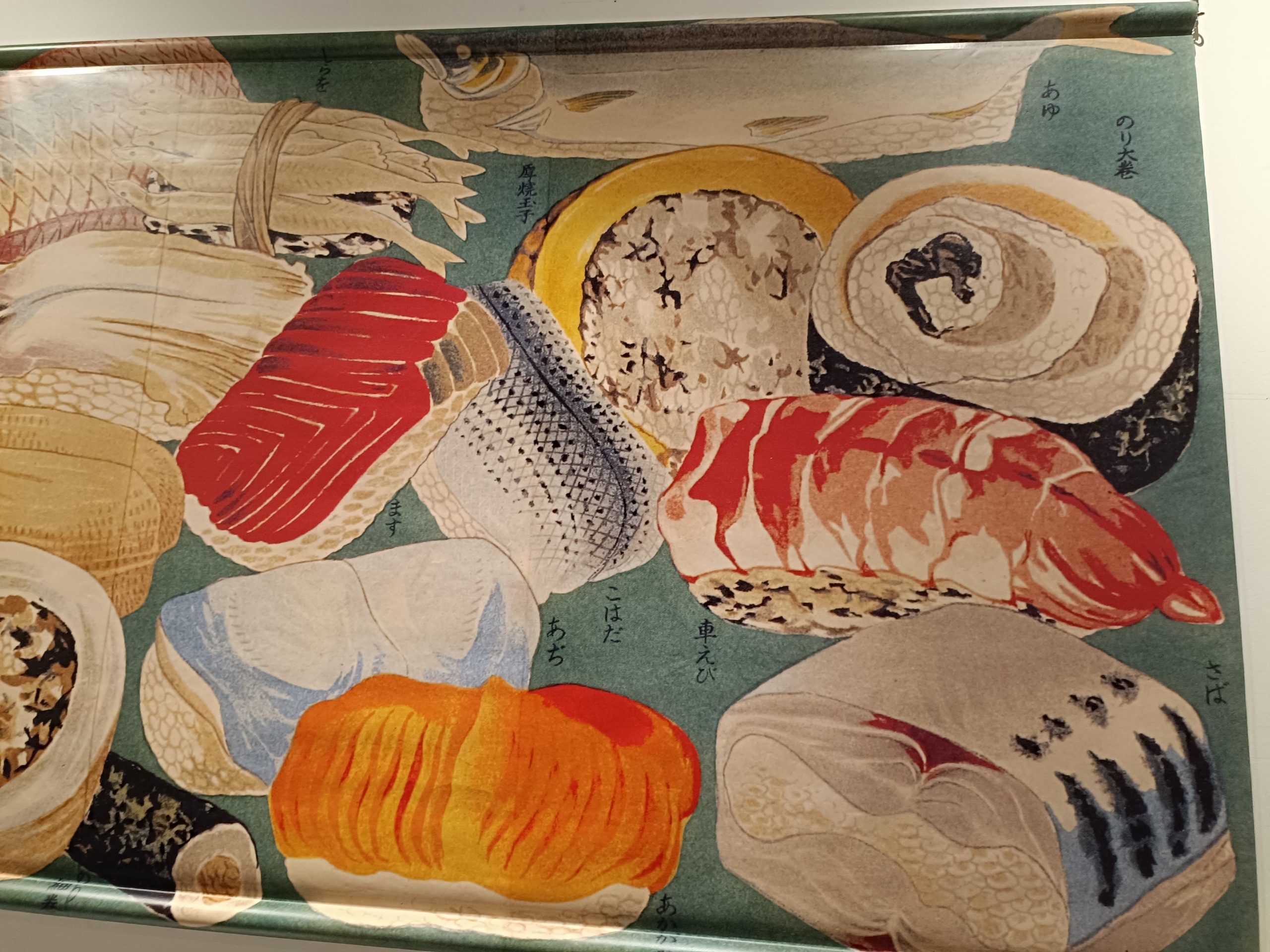
The history of using tuna in sushi making is interesting.Today, bluefin tuna (maguro) is the undisputed king of the sushi world, but it was historically despised in Japan. For centuries, tuna was considered an unlucky, low-class “garbage fish” (gezakana).
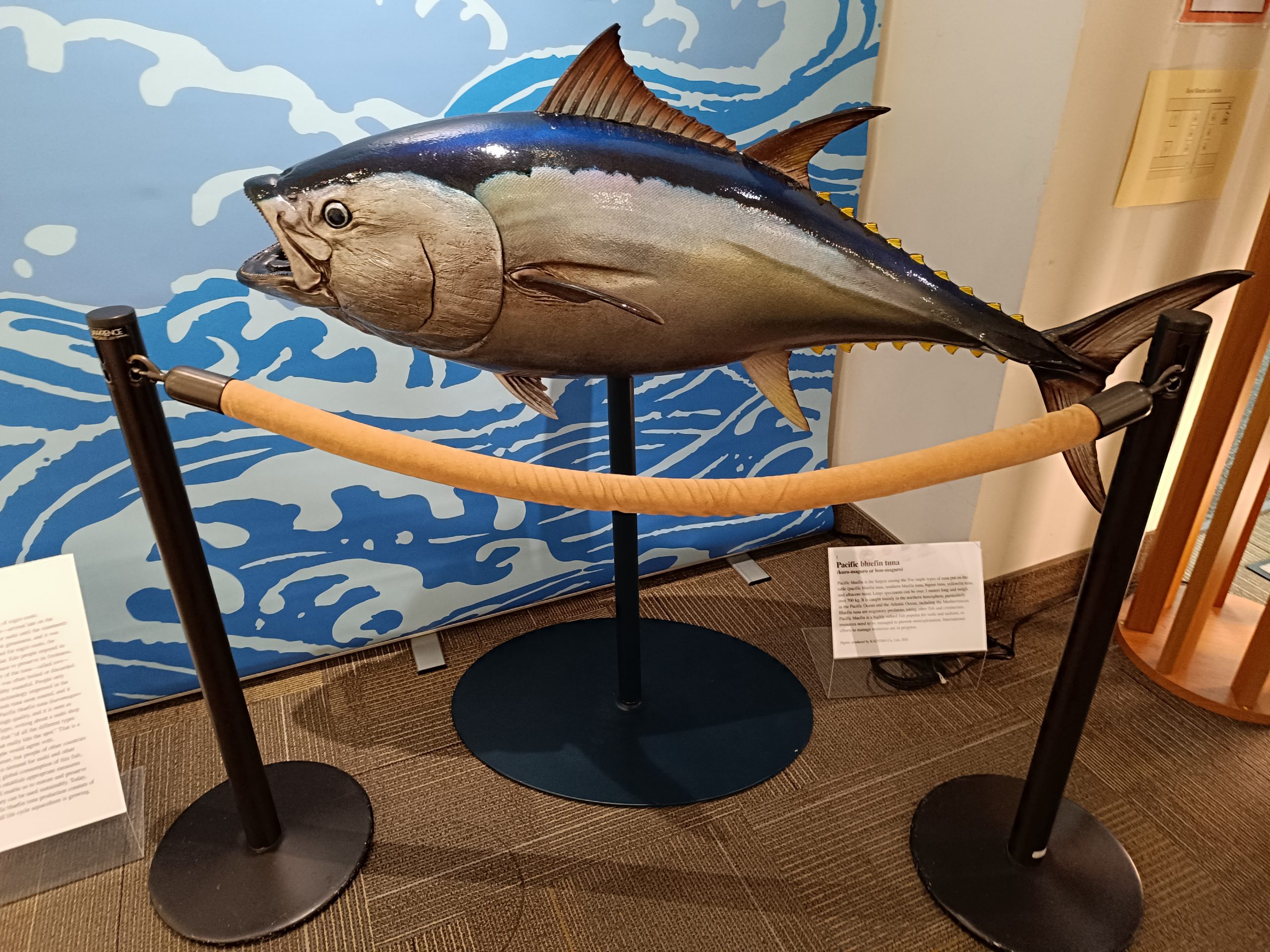
In ancient Japan, aristocratic diners strictly avoided tuna for three reasons: the old Japanese word for tuna was shibi. This was homophonous with the phrase shibi meaning “day of the dead,” making it highly taboo and bad luck to serve; tuna is a warm-blooded, highly metallic migratory fish and without refrigeration, its dark red meat oxidized and turned a repulsive, foul-smelling brown almost immediately after being caught; and when peasants had no choice but to eat it, they would sometimes bury the meat in the ground for four days to let it ferment, just to mask the bloody taste.

The true golden age of tuna didn’t arrive until after World War II, fueled by two massive shifts.

During the post-WWII American occupation, the Japanese diet rapidly shifted toward Westernized preferences for higher fat contents, beef, and dairy. Suddenly, the rich, buttery texture of toro went from greasy to luxurious.

By the 1960s and 70s, the invention of specialized electric flash-freezers (-60°C) and commercial air freight allowed global airlines like Japan Airlines (JAL) to transport perfectly preserved fresh bluefin from places like Atlantic Canada directly to Tokyo’s markets overnight.

Today the cuisine has evolved into a massive $18.28 billion global industry that blends strict Japanese tradition with high-tech automation and modern lifestyle values (The Businesse Research Canada).

Ironically, the ancient history of narezushi has come full circle. Some avant-garde chefs are now experimenting with using traditional Japanese koji (fermentation starter) to add intense, aged umami depth to contemporary seafood and fatty tuna (toro) dishes.

Here are the top local sushi spots right here in Etobicoke, grouped by style and budget:

IKKOI SUSHI&RAMEN at 5084 Dundas St.W.,(20-30 $ per dish),KIBO SUSHI at 4925 Dundas St.,W.,(20-30 $),SUSHI RUN at 3351 BLOOR ST.,W.,and very popular ,,all you can eat” K&B SUSHI at 1184 The Queensway.

Photo and video made by Helen Polishuk&Astra Production 2026.

Auto Show 2026

How quickly almost two months of 2026 have flown by.
And all because, in the Canadian winter, most city events, like people’s lives themselves, slow down and retreat to apartments and houses. This means people are less interested in events, go outside less, socialize less, and the events calendar has been rescheduled until the end of March, when the sun warms up more or less and exhibitions, events, and meetings begin.
And festivals, especially street festivals, which are popular in Toronto, are held from June or late May. Such are the wonderful nuances of life here in Toronto.
However, there are exceptions.
One of these is the annual International Auto Show, which is held in Toronto’s most prestigious venue in Metro Toronto Convention Centre.

Situated in two separate buildings connected by a long bridge, on three spacious floors, this weekend it brought together the entire population of Toronto and surrounding cities.

I would like to point out to you right away that the exhibition runs until the end of the month, that is, until the end of this week, and anyone who can or wants to attend should hurry.

As a frequent visitor to this exhibition, I’d like to invite everyone, even their families, to come.
There’s plenty to see.
Magnificent collector cars, from Audis to miniature cars, collected by a Canadian family and lovingly displayed.
All of this is located on the ground floor of the main pavilion.
The oldest exhibits, the oldest cars, are also there, and are on display at the Ontario Museum of Automobiles.
I’d like to point out right away that when cars first appeared and replaced horse-drawn carriages, they were magnificent, very spacious, and distinguished themselves from modern cars by their simplicity, comfort, and large size.

Now, a century later, everything has changed so much that on the same ground floor of the main pavilion, a modestly displayed mini-car is electric, fits one person, and is representative of the modern metropolis. It’s a mix of bicycle and scooter, rechargeable, doesn’t require gasoline, and is advertised as completely green, which is hard to believe, as electricity isn’t green either, and is even more controversial than gasoline. Does such a car have a life? As the smallest car, it already has its place in history.
And ascending to the main floor of the main pavilion, to the prestigious showrooms of Mercedes, Audi, Toyota, Nissan, Kia, and Jaguar, it’s impossible to miss the central space dedicated to Tesla. There’s also a Tesla robot, along with clothing and accessories from a leading brand. There are many buyers, and the prices aren’t cheap. Mercedes showed off a large truck where you can drive, travel, sleep, and cook. This is a first, and only at this show.
In general, I want to point out that car prices have suddenly increased.
There are many people interested in the new models.
What’s noticeable is that during times of depression, car colors become brighter. Today, too, there’s a very vibrant color range.

Apparently due to competition, almost all companies created bright colors, from pearlescent green to bright red and gold.
The two most expensive cars in the showroom were gold.
The Bugatti was the most expensive car in the showroom.

There were a lot of people. Families there.
And for me, already familiar with the panorama of cars, I liked many of the exhibits. Of course, I wanted to play games, win prizes, drink delicious German coffee, take motorcycle selfies with the collection of Japanese motorcycles on display, and ride a Jeep in a special area—they had set up adventures for the Jeep, and you had to wait in a very long line to sign up for the Jeep driving challenge.

I didn’t wait, so I left it for those more patient.
Overall, I got a huge boost of energy.
Don’t forget, the exhibition is only open until the end of this week.

Traffic Light

Can you imagine that in our city life the most important object in behavior on the street, in safety and correct presence on the street of such a big city as Toronto, is a traffic light.

It does not allow you to stroll carefree along the fastest highways, it stops you, makes you wait, let cars pass politely and then carefully lights up the green light so that you can calmly cross the road. Do not rush. No need to rush, because the computer has calculated for you how much time you need so that you can calmly cross the road. Do not take risks. In the last minutes, when there are 2-3 seconds left, you are unlikely to have time to run, and angry drivers do not want to give in to their time and the law and jump out in the first seconds of their traffic.

And not late, looking at large skyscrapers and various passers-by. Be vigilant and collected.
This is the most important law of life in a huge megacity every day. Going out into the street in the morning and ending with evening walks.
No matter how we miss it, but everything in a big city is collected in one big digital regime movement. It is interesting to watch this when you think about it. Here on the right at the traffic light, pedestrian traffic has started. The red color appeared. The cars started moving. Here the cars stopped. Pedestrians are crossing the street in front of you.
Red again. The cars started moving. Here the green light came on to your left and pedestrians are walking towards you. Stop.
The cars started moving. Again the traffic stopped.
Here the red light changed to green and the road opened for me.
I can go. I am crossing the road.
Sometimes this rhythm is like music. Through it, somewhere, the sound of a disgruntled driver pops out, pushing a passerby to quickly cross the road and stand on the sidewalk.
Sometimes the rhythm is interrupted by the signals of firefighters or an ambulance or a policeman.
Sometimes the traffic light stops working and then a policeman saves it, who stands in the middle of the road and regulates traffic.
But this is very rare.
More often, workers arrive, fence off part of the road, restrict traffic and clean, repair or clean up.
Life of a Toronto street.
I was able to convey this rhythm in my new painting, which is exhibited on my website :

https://www.saatchiart.com/en-ca/helenpolishuk

The painting is small, but very dear to me, as it continues the theme of city life. And it is called, “Traffic Light”.

https://www.saatchiart.com/art/Painting-Traffic-Light/970132/12657685/view

This picture in miniature collects the minutes before the car starts moving in a big city.
Now it’s red. Then the green will open and the cars will go.
The city of Toronto is big and beautiful. The city traffic is complicated, there are many traffic jams and repairs.
And the most important regulator of street life in the city remains the traffic light

20 % off use code SUNBEAM20 up to May 29,2025

https://www.saatchiart.com/art/Painting-Traffic-Light/970132/12657685/view

Let’s move on

new works by the artist Helen Polishuk in her favorite style

I really want these warm sunny days already.
No matter how warm this winter was, it was not sunny and the lack of energy and warmth affects the mood of people in Toronto. However, I always repeat that everything passes. And after the cloudy days, warm days will come. And the seeds planted will break through the cold ground into the ground. And the gardens will bloom and the ringing singing of birds will flow, which notify about their offspring.
And we can live. After all, a new day is wonderful. A new video with the latest Petrykivka for you, my dears.

If you don’t already know my most active page, here it is. It contains all the latest news from the world of my creativity and painting.
Let’s move on

Mid-March

I am very glad to get a few minutes again and write little, share with you my news.
I am now in a state where all kinds of my creative activities are involved. Here is the creation of video films and the script for a future film, and the editing of an already created film and coordination, and planning the next step in community service and new acquaintances, and preparing for voting for an Oscar 2023 and….hmm…. There will be heavy snow tomorrow, another one in March.How much more?
That’s all?
No, I still regularly do household chores, from which no woman will run away.
And I’m getting ready for a big concert, which will be at the end of May. That’s all for now. Secret. I’ll tell you the rest as the month approaches.
But for now the main thing for you.

The last work, which has already been sent to the competition, SHEVCHENKO UNITES NATIONS ,,.
Today, March 9, is the birthday that every Ukrainian knows. This is the birthday of Taras Grigoryevich Shevchenko.
An outstanding poet, writer, bart and artist. His name has remained in the culture of Ukraine as one of the most prominent cultural figures, whose works give us strength and teach entire generations of Ukrainians.
Today he is known and respected not only in Ukraine, he is taught, his works are read by all the people of the planet.
For you, the performance of Mominul Hoque, the Ukrainian Cossack Sirius from Cherkasy.

“Love and Betrayal”

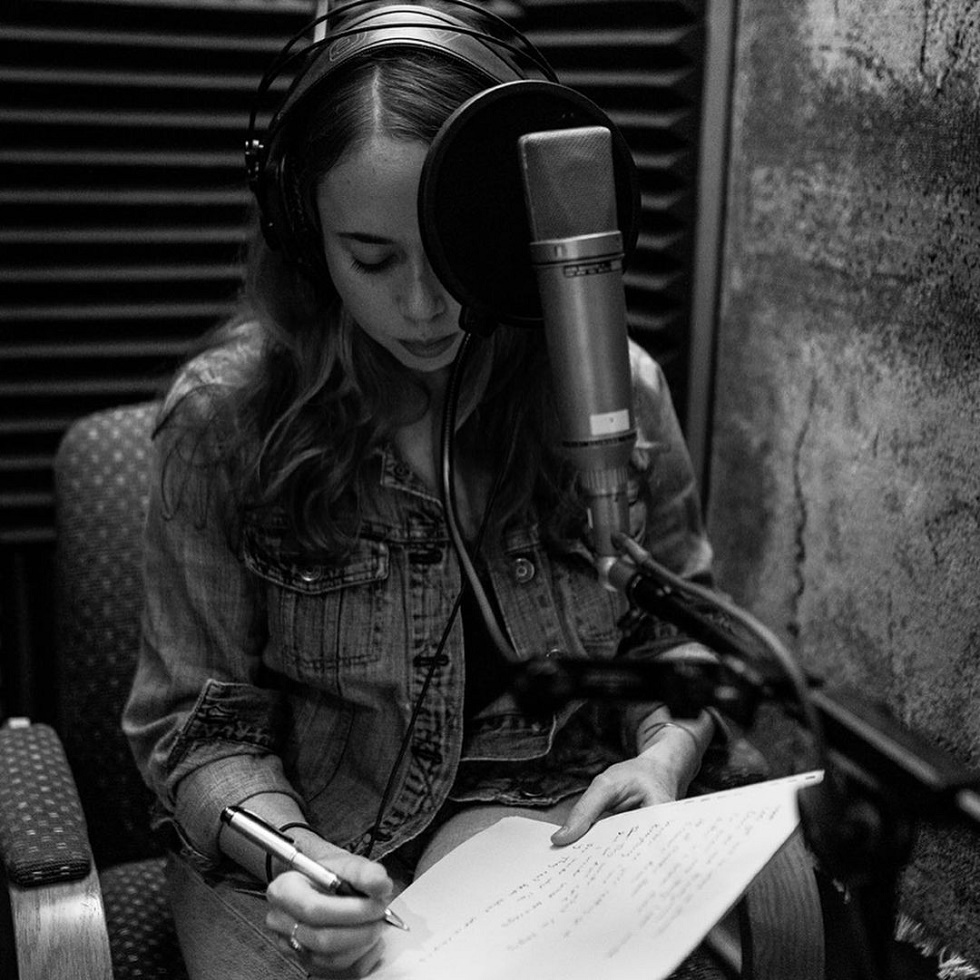
The author of this poem sent it to me by mail. I agreed with the author that our Canadian actor from Kyiv, Oksana Smilska, can read it best of all.

Oksana created an audio track. And the poem was lying on my table, waiting for its time. And now, when its time came and I started editing the video, I just dropped my hands from the difficulties.

A special heartfelt poem, a very talented performance by the actress put me in a corner. I understood that she had to create a script. He and she. The conflict is when She realizes that he has betrayed, that he is lying and will continue to betray and forgives him. But here, attention forgives, but does not agree with him, but tells him that your humiliation of me is wrong, I am fit to be loved and I will find myself a loved one. And in this sense, in this scenario, I created this mini-film. It is to show that in no case should you humiliate yourself and give in, but you need to free yourself and find someone who loves you.

It is very important to convey this to young people who do not know how to deal with conflicts. The fact is that a few years ago I studied this topic by writing one of my first scripts, and then, unfortunately, I found a lot of psychological training about what is possible and what is not. What is bad and what is good. But these trainings do not go beyond these terms. There are many films, serials, they end in a crisis. So, He tormented Her and either they broke up, or He left. No. Most often He tormented, tormented and will continue to torment. And the healing or the way out is not to call yourself a victim, but to decide for yourself what is important in order to become happy. With such thoughts, I sat down to create this mini film and this video appeared. It is difficult, but it is. I will review the year. I always do this, the video will lie down and I will open it in time, I will look with a new fresh look. And today I am publishing it for you. Undoubtedly, a very good poem and work by Oksana Smilska.

Further will be.

Stay with me.

Helen

Went into myself and there is a showdown

blurstudiobolivia-___BeqOJ7MDp4B___-

,,……Went into myself and there is a showdown…,,

Well, to be precise, I’m in the process of making two films right now, which one will shoot first is hard to say.


5

Even three-third is the continuation of Mimmy’s Adventures. This is a set of fresh videos for the plot of the next series.

But the first two are future films.

6

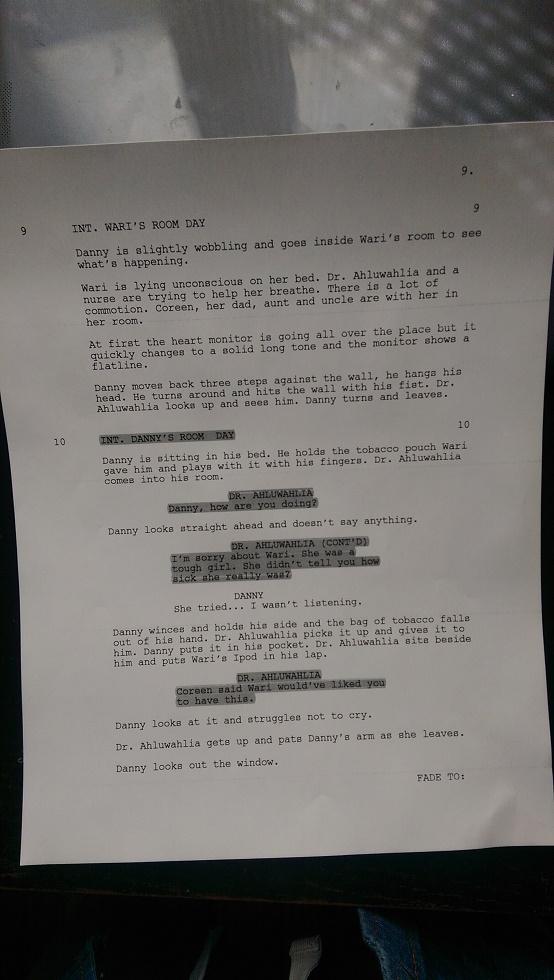
Although, like all real cinematographers, I very much hide the preparation, but I can already reveal some details. So, two scripts are written.

7

Somewhere they are similar, the theme is historical.

But somewhere they are very different. They touch on different topics.

The scripts, I repeat, are already ready. Now for the final part about the writers, if you think this is where my work ends, it’s a mistake.

This is just the beginning.


Having gone through the difficult path of selection and agreement with the customer, now we need to translate this into a film, and then work with the production and producer.

2

Waiting for evaluation and correction from the director. Discussion of the nuances – how to shoot it. Not all the possibilities (I have a financial site) are easy to put into the film/what I’m wrote.

And here are the discussion about how to shoot this or that scenes. If I hadn’t worked in the cinema before, I would have been scared. But I am a tough nut to crack and gradually came to what I am doing today.


I am very interested in every stage of making a film. And I love difficulties and overcoming them.

I already wrote that when I had difficulties, I sat down and overcame them.

Therefore, tomorrow, this week, for a month, I am waiting for an agreement with the director of his vision of the film according to my script. Then the calculation of the budget of the film and again a conversation with those or more people about how we will shoot this or that scene.

I emphasize that for this I practiced a lot, trained on short films, honed my practice in making videos, this gives me a vision of the whole construction of the film. This is about the first scenario,first future film.

3

The second scenario has been created too. It is very good. It is at the stage of organizing financing for it. I, as a,, parent ,,of,, my script,,

, will invest here, possibly part of the time and part of the financing also, since the film is very dear to me.

Of course, I will open an account to financing the film and I will ask you to help or suggest who to work with and who can support the making of the film,who can donate for creation film.

This is the next stage and if it goes well, then our second film will be. Did you think that you would write on a piece of paper and this will all end?

Even in the 18th century, all the best poets and writers whose works have survived to this day, they gathered around patrons who publish their works. Nothing is random and I really like it too.


And the short films ?I love my short films. And over this year, many festivals have loved them.

A distinctive feature of my films is a clear presentation of the theme, a refined script and a lot of modern special effects. Therefore, a movie about Mimmy’s Adventures is on its way.

4

Will you ask about the Blue Funk one? It will be a very cool movie, and I won’t talk about it today.

So, look forward to the next posts. Follow my news on social networks. (Instagram Facebook YouTube channel  Telegram Tweeter)

You will find them on the main page of this website and fill free to connect

fbavatar_1618702343649_6789329714778521152


And thank you for reading my posts.