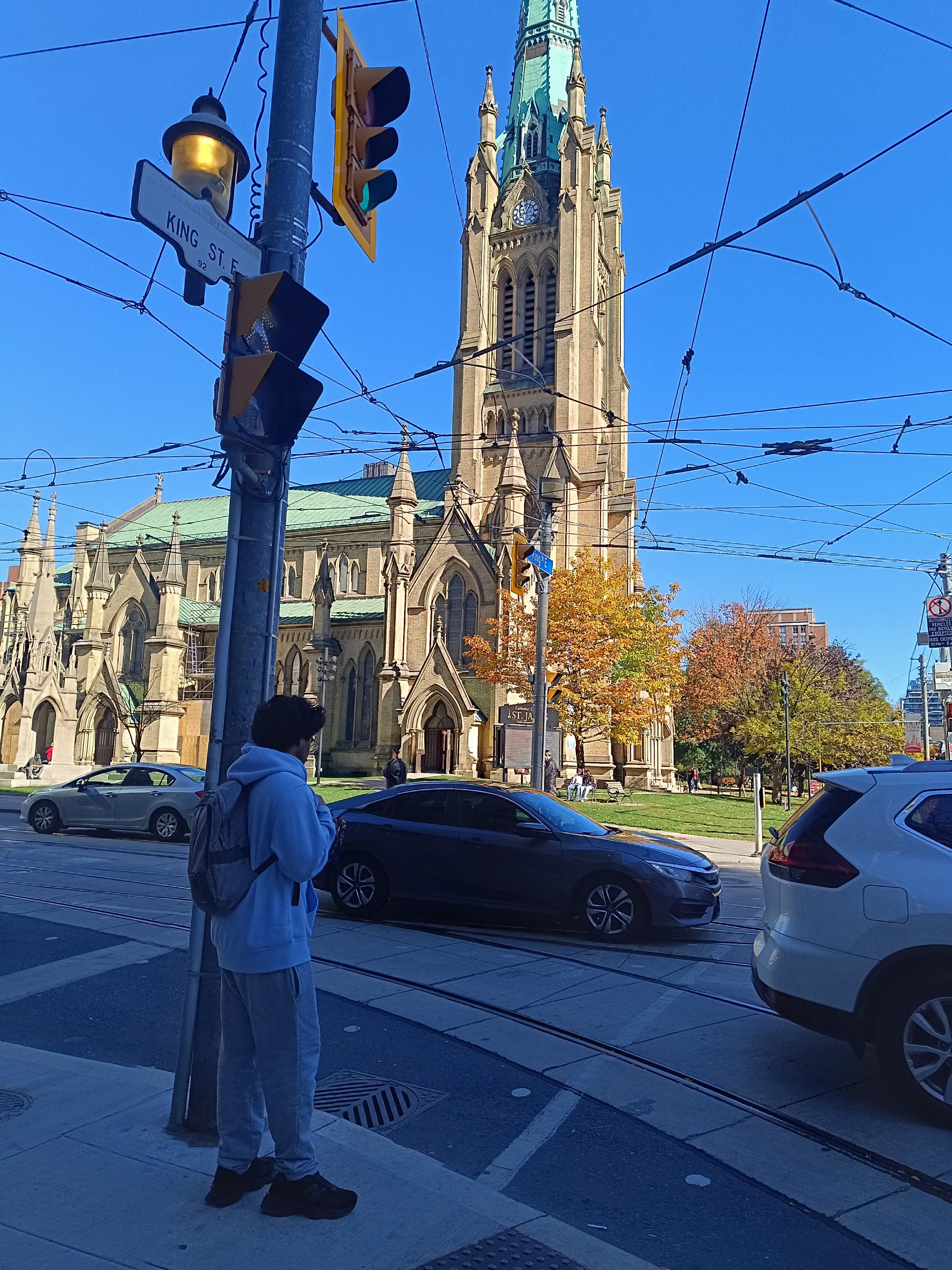
It is difficult to describe my impressions of visiting the church itself, but I will collect my thoughts and share with you a few minutes of a wonderful story about this relic.
This Anglican church was built in the mid-19th century. It is a true cultural hub in Toronto.
The church is unique because it is the tallest Anglican cathedral in Toronto and the second-largest in the Americas. As you can hear in the video, it features a distinctive set of 12 bells—themselves unique, as they were crafted for traditional English-style bell ringing. (change ringing).
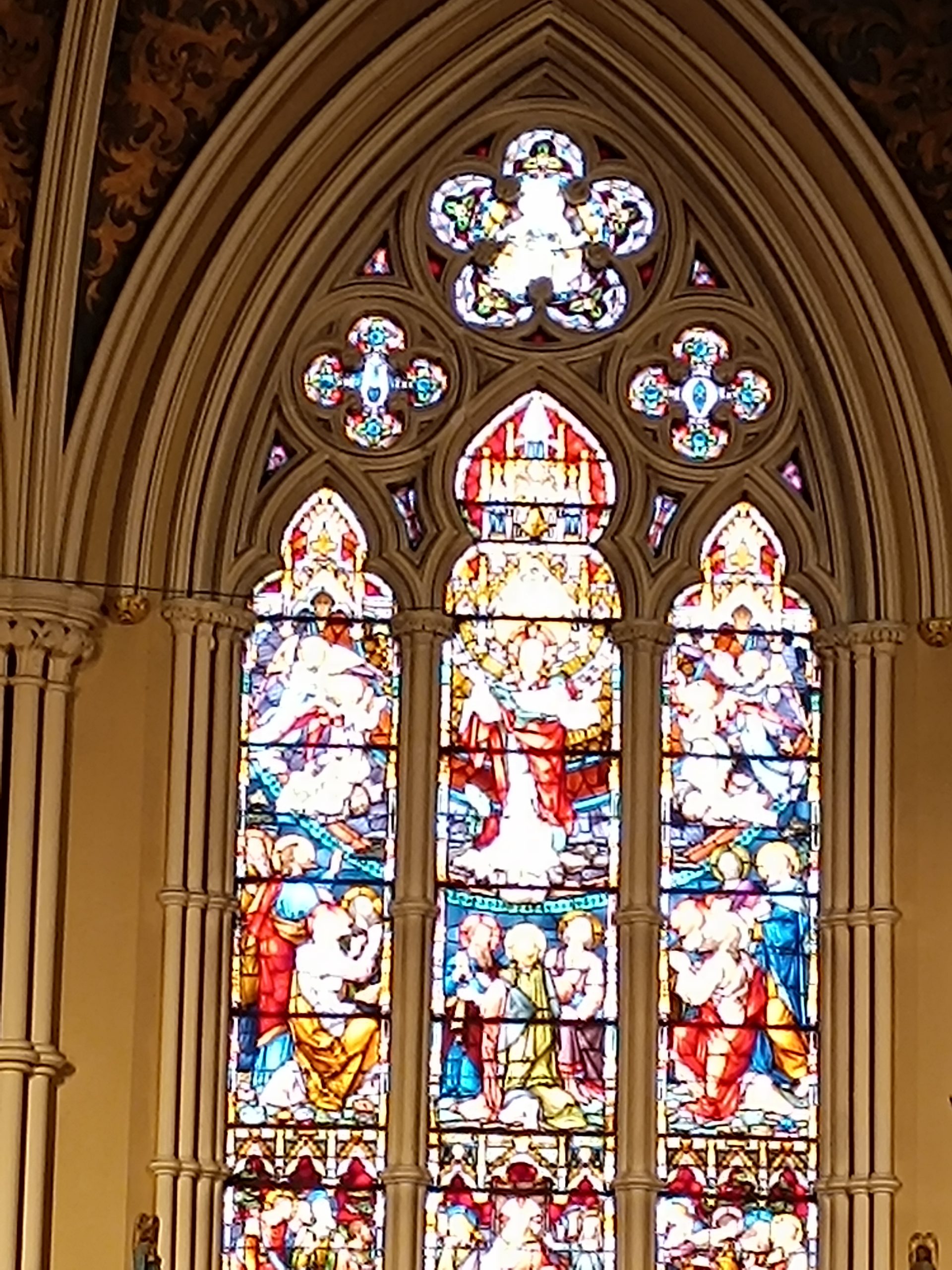
If you are familiar with the design of Anglican churches, you will notice—in this cathedral, as in other similar churches—beautiful stained-glass windows; the entire history and all significant dates are reflected in the imagery of these windows. Many of the windows in this church were created by the renowned Canadian artist Stuart Reid.
A beautiful park with fountains surrounds the church—this is also a classic example of English church design, as the park was where the people and parishioners spent their daily lives. And today, the park, near the fountain, is filled with children with their parents, lovers, and ordinary citizens. It’s a place for relax.
The park also takes its name from the church- St.James Park.
St. James Cathedral serves as the mother church and principal cathedral of the Anglican Diocese of Toronto; it houses the synod of the Anglican Diocese and the synod’s administrative offices.
The history of this church is closely linked to the founding of Toronto and the arrival of migrants from Britain. When Toronto was first established, it was a settlement known as York. It was on this very site that the first parishioners held Anglican services as early as 1793—out in the open, on the land itself. Later, in 1807, a wooden church was built there. During the War of 1812, American forces looted the building and used the church itself as a hospital.
In 1833, a stone structure in the neoclassical style was built to replace the original wooden one. However, fires—which ruthlessly destroyed everything in their path—consumed it. The year 1839 brought two significant events that shaped the history and development of the church: it burned down completely, yet it was also granted the official status of a cathedral. After being restored and rebuilt, the church was destroyed once again in 1849 by a massive fire that swept through all of Toronto. Miraculously, a marble baptismal font survived; it can still be seen in the church today, located on the right-hand side as you enter through the main entrance.
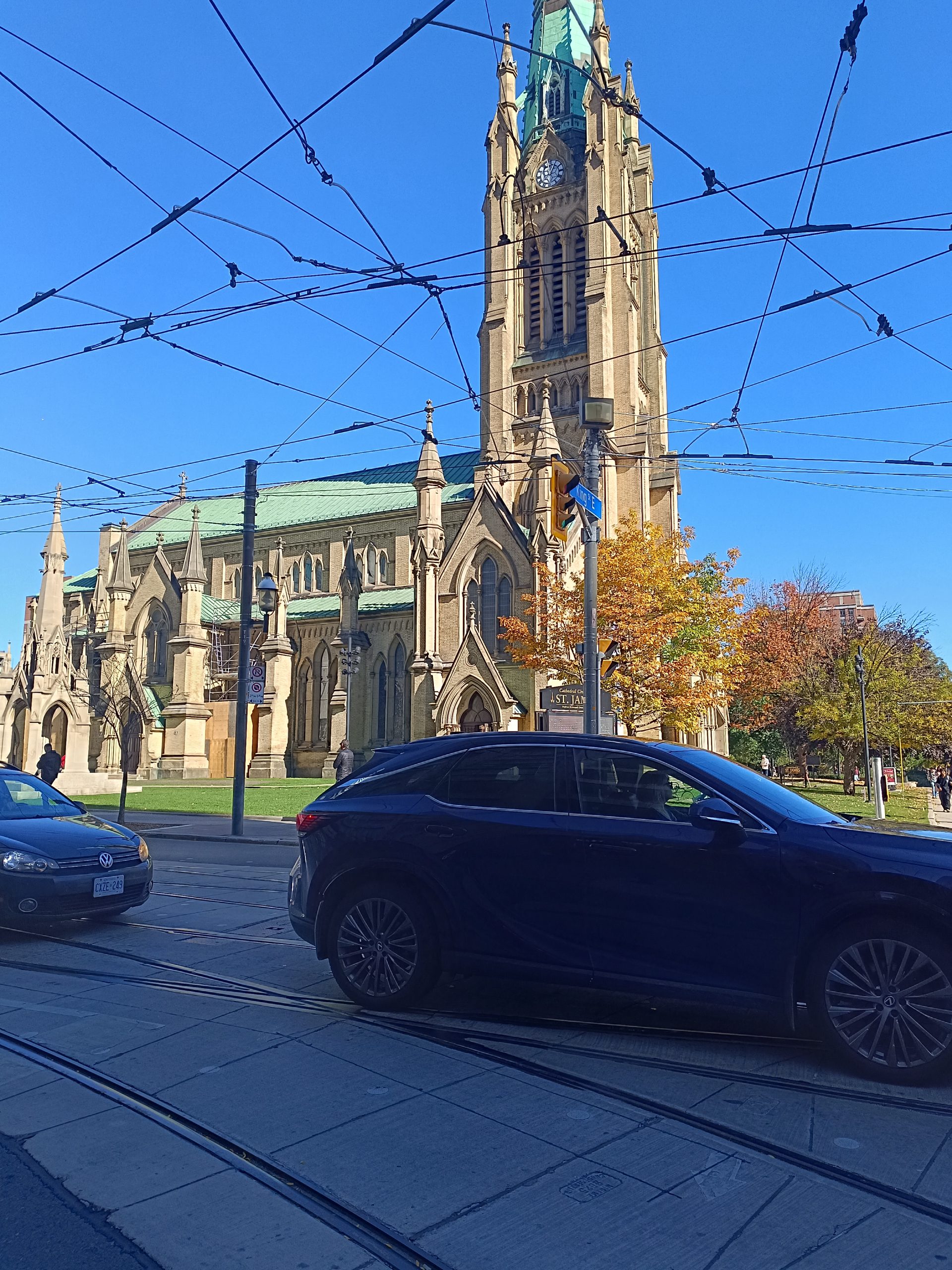
In 1853, the church was restored and opened in the form in which it exists today. It was designed by the architect Frederick William Cumberland—a renowned and highly influential figure of the Victorian era. He was responsible for creating many of Toronto’s unique structures, including—in collaboration with Thomas Ridout and William George Storm—University College (1856–1859), Osgoode Hall, the Old Toronto Post Office, the York County Courthouse, Cumberland’s own residence, the Magnetic Observatory, and this magnificent cathedral.
The church took several decades to build, and in 1875, the construction of its spire was completed. At that time, the cathedral was the tallest building in all of Canada.
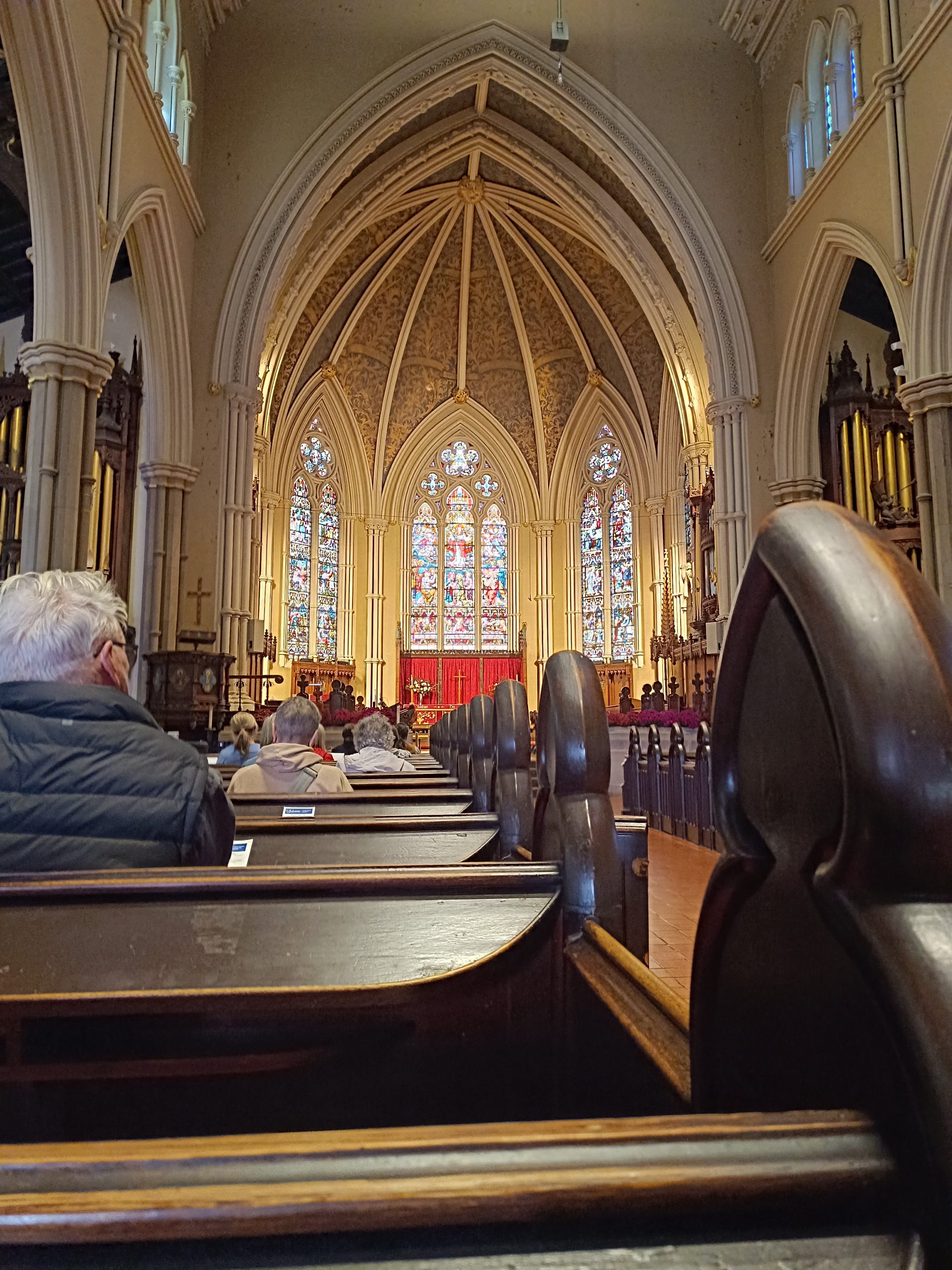
I can imagine how the townspeople must have rejoiced and taken pride in this structure. It is truly impressive, and you can really sense that spirit the moment you step inside the cathedral itself.
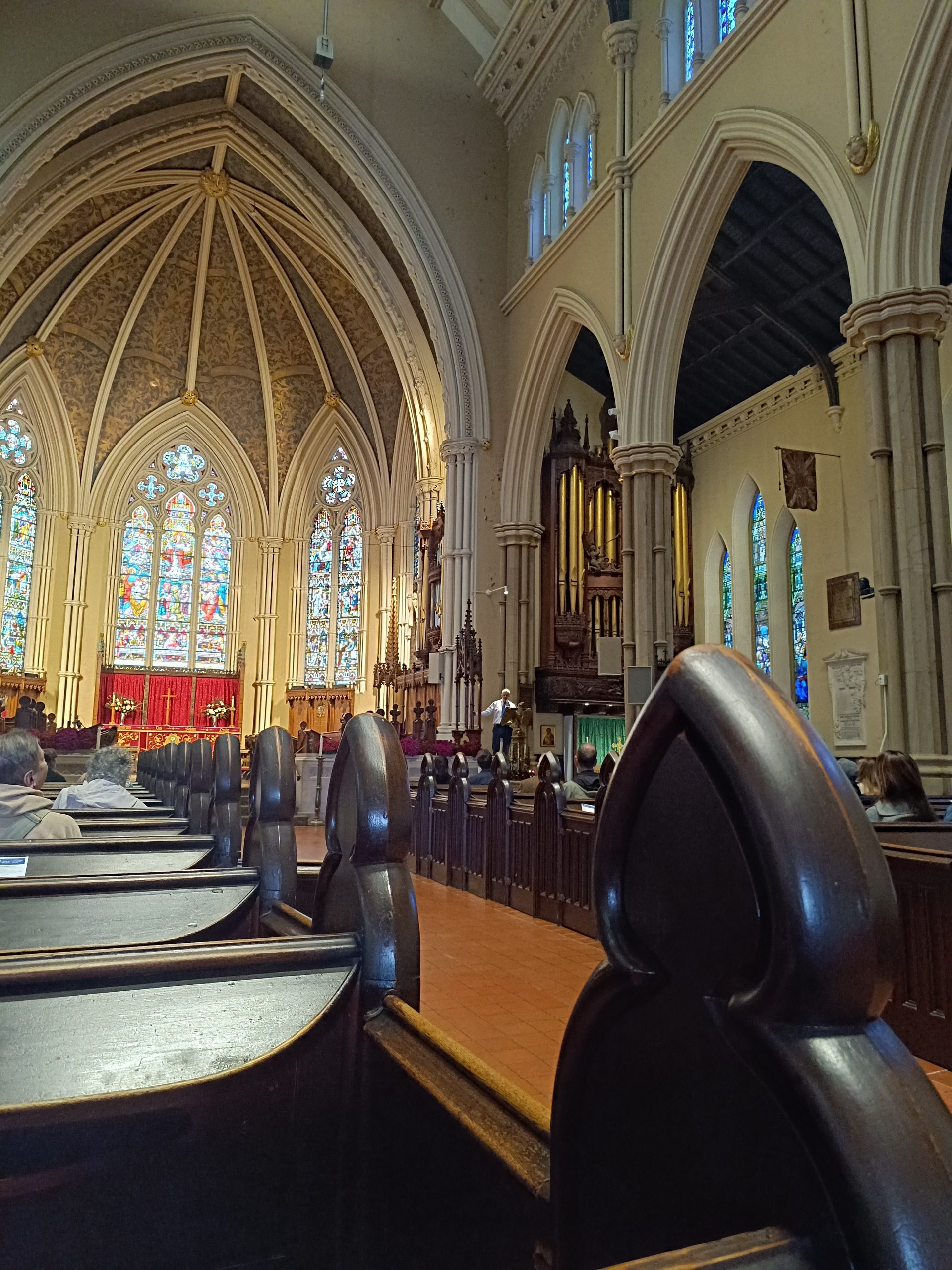
Today, the sound of an organ constantly resonates beneath the vaults of this magnificent Cathedral—a sign that the sanctuary is alive. In celebration of music’s triumph over darkness, the beautiful compositions of Bach, John ireland,Thomas Tomkins,George Thalben-Ball,Herbert Murrill,Orlando Gibbson and Charles Villiers Stanford ring out within these walls.
Music transcends time. Both it and this cathedral are remarkably contemporary. In November, the cathedral will host a multisensory light show ,,Celestia”; beginning at sunset, it will combine organ music with light projections—depicting the history of the cathedral and life in Toronto—cast upon the cathedral’s arches. This spectacular event will conclude on January 31, 2027.
Currently, the Cathedral is open to visitors free of charge: Monday through Saturday from 10:00 a.m. to 3:00 p.m., and on Sunday from 8:00 a.m. to 6:00 p.m.