Today’s post is exactly packed only with information. Why? Well, I’ve started planning out my days and hours because my various responsibilities simply don’t leave me any time to relax. I’m learning—learning how to manage myself, my instincts, and my moods. So, according to my schedule, it’s time for a walk with my dog. But before that—and since the weather outside is absolutely wonderful—I’m going to write a short story about love to submit to a contest. I’ll also put together this post to share some very interesting information with you, keeping you close to what’s going on in my life.
Let’s get started!
The title of my post is “Matisse or Picasso”—and for good reason.
Both were artists. What brought them together, and what set them apart? They lived during the same era, both hailed from Spain, and both were associated with movements like Impressionism, Cubism, and abstract art. As for what separated them—they had different approaches, which resulted in entirely different bodies of work. Picasso leaned more toward Cubism, while Matisse focused on decorative elements and an exploration of color.
But that’s not all.
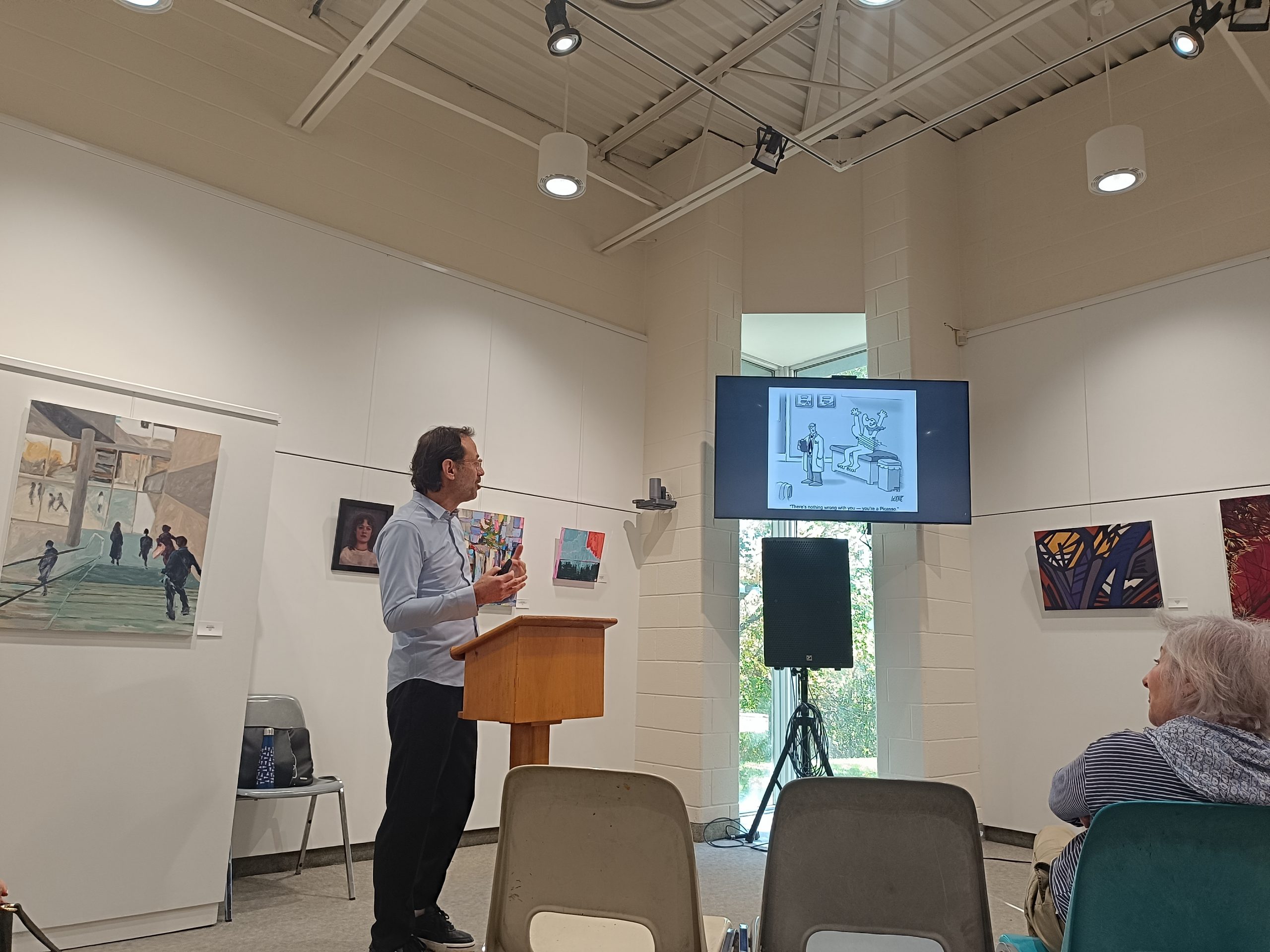
People who study their work have concluded that, throughout their careers, they frequently “borrowed” ideas from one another—or, to use modern terminology, they infringed upon each other’s copyright. Some readers might argue that copyright grants an author exclusive rights to their ideas, imagery, and work—and I agree.
Yet, in the world of art, it is nearly impossible to find someone who hasn’t been inspired by the ideas of a competitor, a rival, or even a friend—and subsequently incorporated those ideas into their own work.
One could point to instances where artists have spent decades in court, alleging that someone stole or pilfered their ideas.
But in this case, we have an inimitable example of creative rivalry between two of the greatest artists of the last century—a rivalry that ultimately proved just how beautiful art can be. Consider the moment someone asked Picasso, “Don’t you think your work bears a striking resemblance to this painting by Matisse?”
With a smile, he replied, “If that’s what you think, that’s wonderful. But that is a work by Matisse—and this is mine. Picasso.”
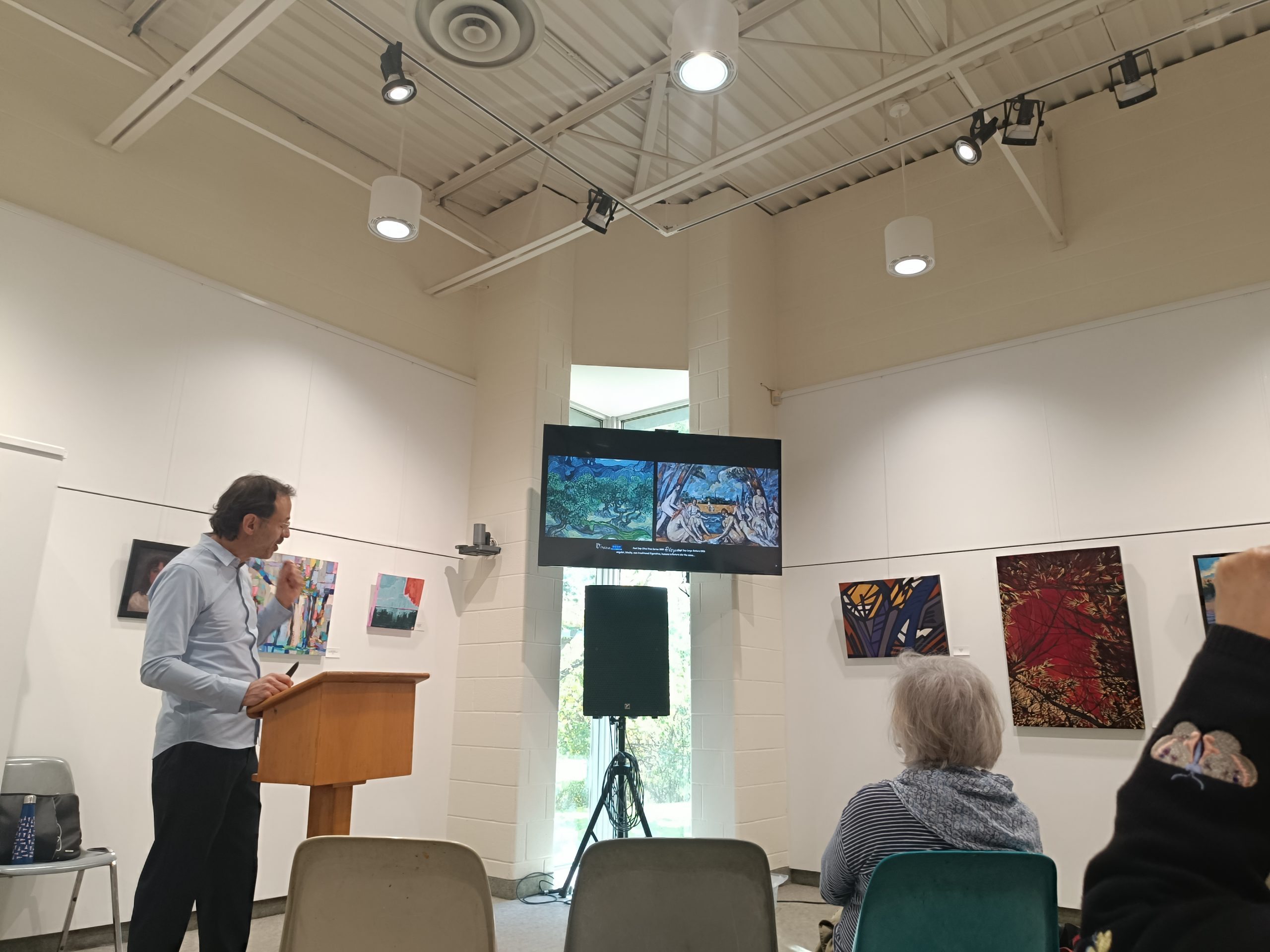
And this is what conveyed to us in excellent form this past Sunday, during his magnificent lecture Jeff Fortinsky in Nelson Park Centre.
A unique study has demonstrated that, over the course of many years—beginning during the height of their creative careers—Matisse and Picasso both produced works centered on the same themes: portraits of women, scenes of dance, gatherings in a garden, and self-portraits. Furthermore, each artist created his respective pieces in close temporal proximity to the other.
And as Picasso used to say, their unique personal style was always evident.
After all, remember—in those days, there were no mobile phones. The only way they could see another artist’s work was by gathering with friends in a café to look through a newspaper or magazine. Later, photographs became available, and they would sometimes create works based on similar themes, inspired by those images.
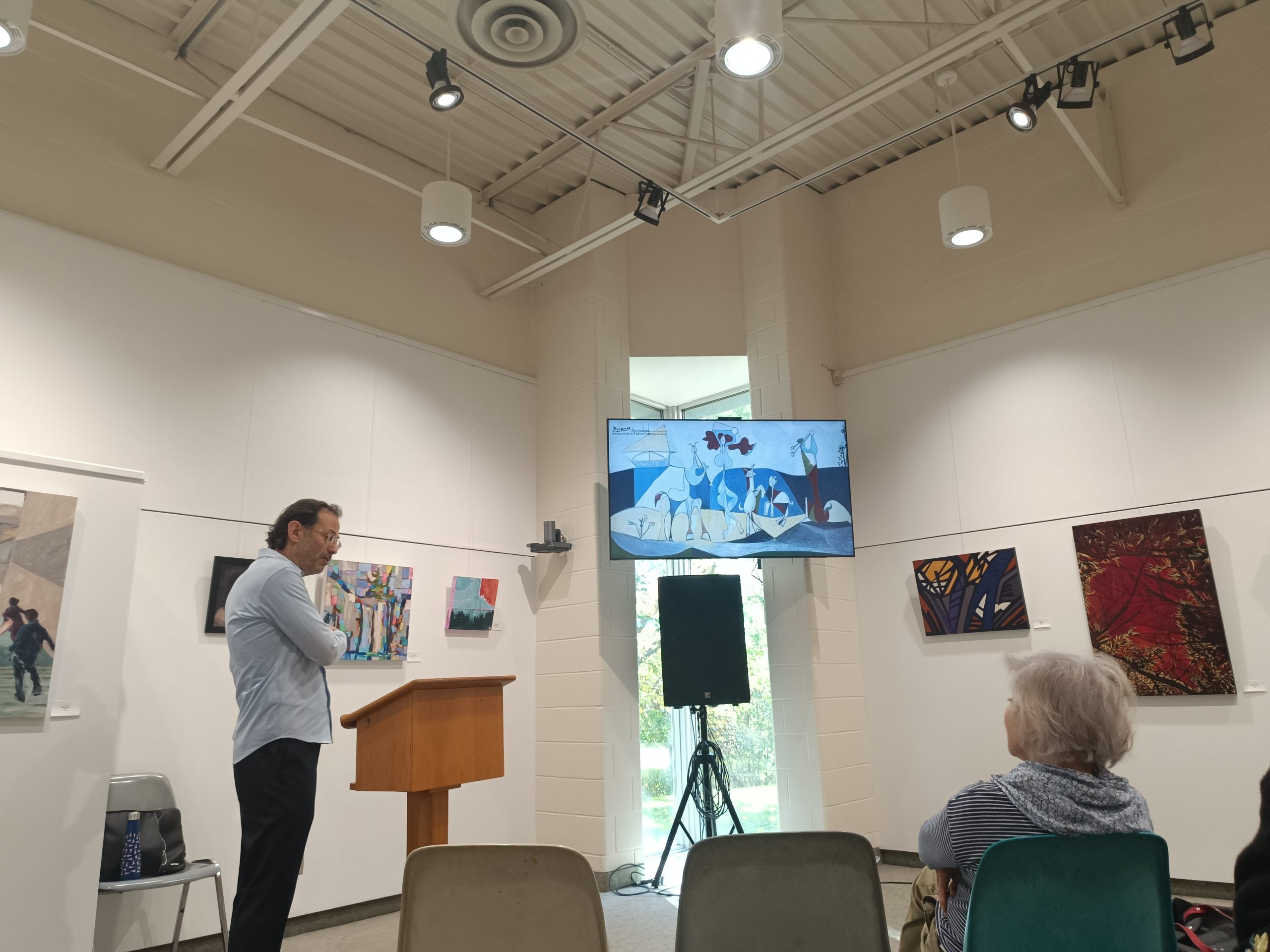
When Matisse passed away in the 1950s, Picasso could no longer continue this wonderful creative relay.
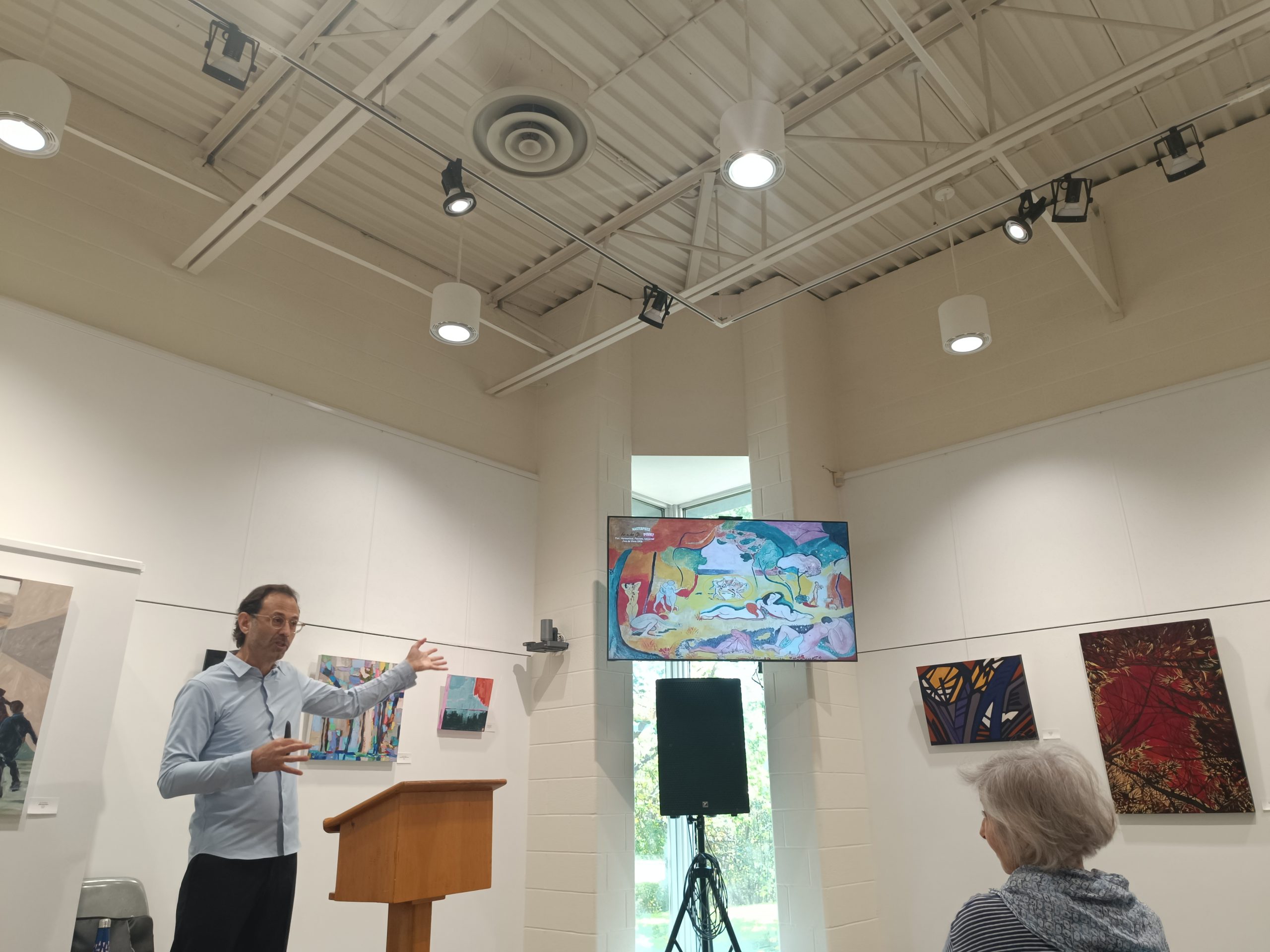
Their relationship was defined by a warm, friendly rivalry—never hostile. Each created in his own distinct style and manner: Matisse with a greater emphasis on the decorative, and Picasso with a sharper, more angular approach—through Cubism.
In this way, the creative journeys of these remarkable artists became a lasting part of the history of the last century.
Interesting, isn’t it?